A clean garage can look worn out fast when oil, fertilizer, tire marks, rust, and tracked-in dirt settle into bare concrete. To prevent garage concrete stains, the goal is not constant scrubbing. It is stopping liquids and contaminants from getting time to soak into a porous slab in the first place.
That matters even more in the East Valley. Arizona heat bakes spills into concrete, hot tires can leave stubborn marks, and a garage that doubles as a workshop, storage room, or home gym sees more abuse than most homeowners expect. A few practical habits help. A professionally installed protective coating can take the burden down even further.
Why Bare Garage Concrete Stains So Easily
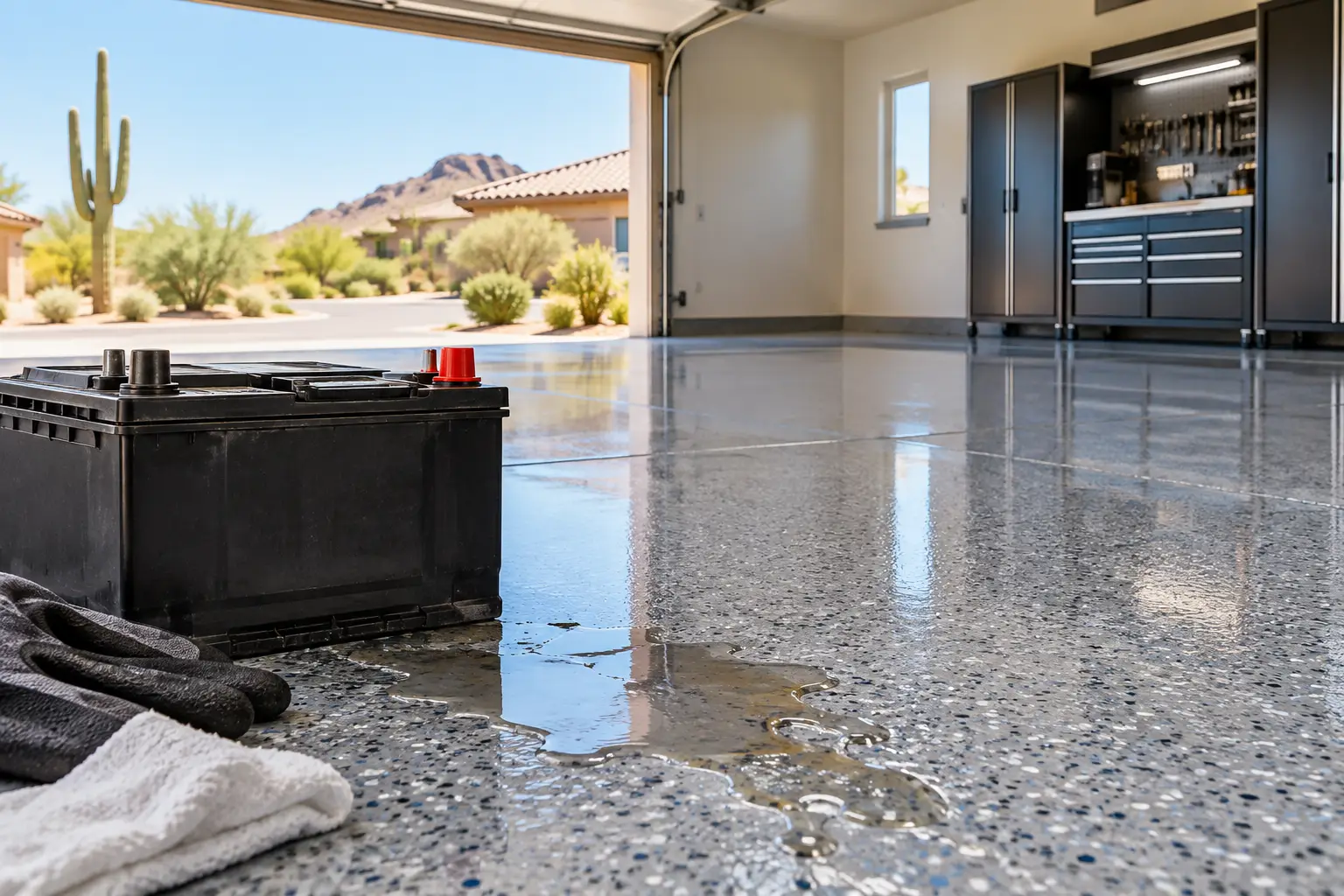
Concrete may look solid, but its surface has tiny pores. On an uncoated garage floor, oil, brake fluid, grease, paint, hard-water residue, and household chemicals can work their way below the surface. Once that happens, a quick wipe is no longer enough. The stain is in the concrete, not simply on it.
Dusting is another common issue. As an untreated slab wears, small particles can release from the surface and spread through the garage. That fine dust sticks to moisture, car tires, storage bins, and shoe soles. It can make a garage feel dirty again soon after it has been cleaned.
Not every dark spot is a major problem. A small fresh oil drip may come out with the right cleaner and some effort. Older automotive stains, rust rings, and repeated fertilizer spills are tougher because they have had months or years to penetrate. Prevention is cheaper, easier, and far less frustrating than trying to restore deeply stained concrete later.
Prevent Garage Concrete Stains With Fast Cleanup
The first rule is simple: do not let a spill sit. This is especially true for automotive fluids. Oil and transmission fluid can spread under a parked vehicle, then get pressed into the slab by foot traffic and tires.
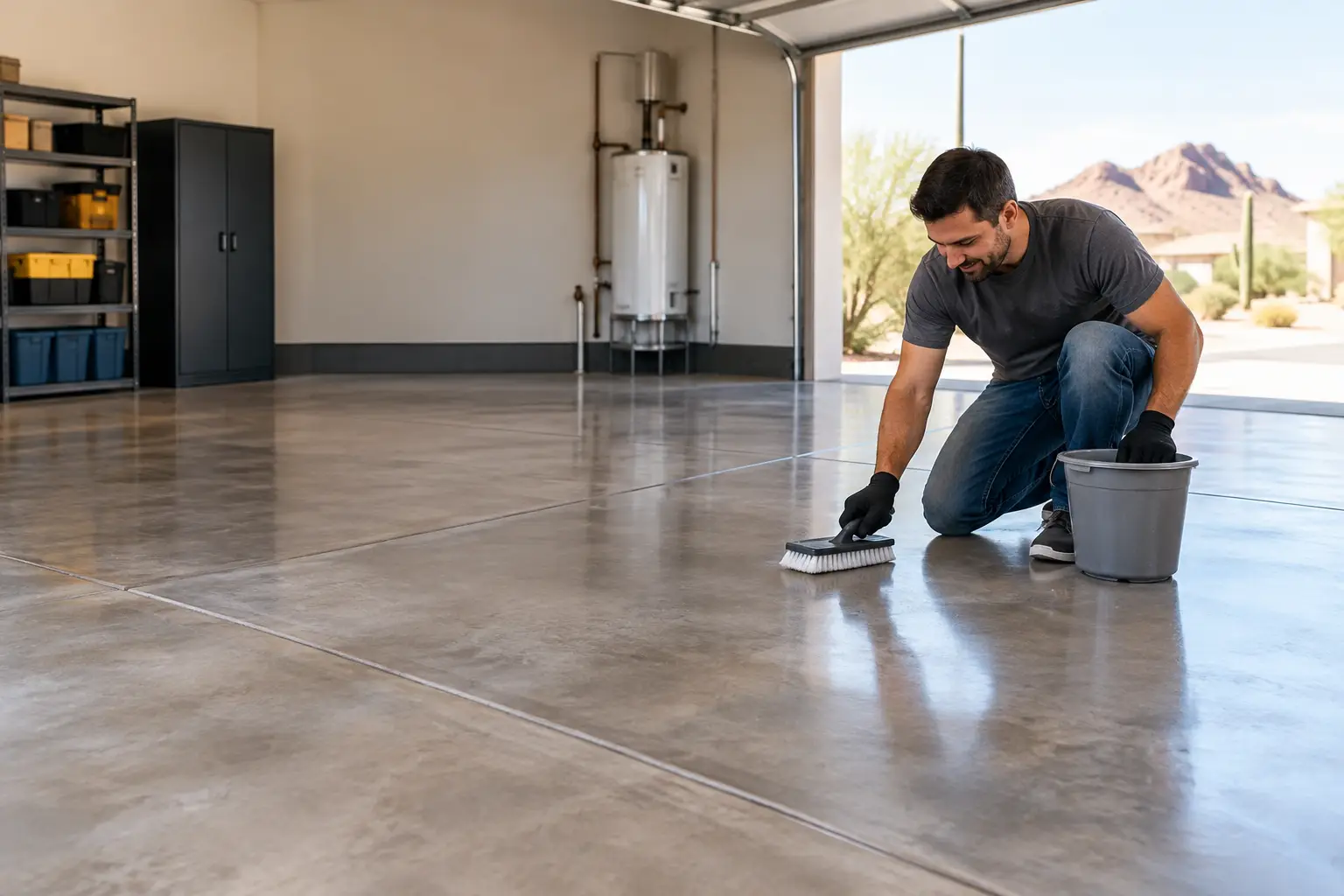
Keep basic cleanup supplies within reach, not buried behind holiday boxes. Absorbent material, a stiff nylon brush, a pH-appropriate concrete cleaner, gloves, and disposable towels will handle most fresh messes. For an oil drip, absorb the liquid first rather than immediately adding water. Then use a degreaser according to its directions and rinse or wipe up the residue before it dries.
Avoid treating every stain with the strongest chemical available. Acidic cleaners can etch concrete, leave an uneven appearance, and create more places for future contaminants to collect. Bleach may help with certain organic marks, but it is not a fix for oil. Use the cleaner that matches the stain, and test it in an inconspicuous area when possible.
If a vehicle has an active leak, place a drip tray beneath it until the repair is made. Cardboard may catch a little fluid, but it can soak through and hold moisture against the floor. A proper tray is cleaner, more reliable, and easier to empty.
Control the Mess That Comes in From Outside
Many garage stains are not from a broken car. They come from ordinary Arizona living. Dust, mud after monsoon rain, pool chemicals, landscaping products, and mineral-heavy water all leave their mark when they are tracked or stored carelessly.
Place durable mats at the entry door and near the vehicle parking area to catch dirt and moisture before it spreads. Mats are useful, but they are not a complete solution. Lift and clean beneath them regularly. Moisture trapped under a mat can leave discoloration on bare concrete and may encourage musty odors in an enclosed garage.
Be especially careful with bags and containers used for landscaping. Fertilizer can leave white residue and chemical stains. Herbicides, pesticides, and pool supplies can damage or discolor a concrete surface if they leak. Store these products upright in plastic containment bins or on shelving with a raised lip. Keeping them off the floor also makes the garage easier to sweep and organize.
Rust deserves the same attention. Metal furniture, toolboxes, damp bicycle stands, and propane tanks can leave orange rings on concrete. Put rubber feet, plastic trays, or shelving beneath metal items that may collect moisture. If a rust spot does appear, deal with it promptly before it becomes a permanent part of the slab.
Do Not Let Water Become a Stain Problem
Water alone does not always stain concrete, but it carries what does. Rainwater can bring dirt into the garage. A leaking water heater can leave mineral deposits. Wet tires may carry road grime, brake dust, and oils across the parking area.
Check for slow leaks around water heaters, softeners, HVAC equipment, refrigerators, and washing machines if they are located in or near the garage. A small leak can go unnoticed for weeks, leaving a broad discolored area and contributing to surface deterioration. Install drain pans where appropriate, and do not ignore a persistent damp spot simply because it is small.
After a monsoon storm or a wet wash day, use a squeegee or mop to move standing water out rather than allowing it to evaporate in place. This is a simple step, but it helps reduce mineral residue and prevents dirt from settling into the concrete texture.
Use Parking Habits That Protect the Floor
Hot tires are hard on garage floors in Arizona. When a vehicle is driven on hot pavement and parked, the tires transfer heat, dirt, plasticizers, and road residue to the concrete. On bare concrete, the result may be dark tire marks. On a poorly prepared or low-grade coating, it can contribute to hot-tire pickup and peeling.
You do not need to stop parking in your garage. Just avoid letting a known vehicle leak continue unchecked, and wash off heavy mud, oil, or construction debris before repeatedly driving it onto the slab. If you use a tire dressing product, give it time to dry before pulling into the garage. Overspray and excess dressing can create slick spots and collect dust.
It also helps to sweep the parking area weekly. Grit beneath tires acts like sandpaper. Over time, it can scuff bare concrete and make staining look worse because dirt settles into the roughened surface.
A Coating Is the Long-Term Stain Defense
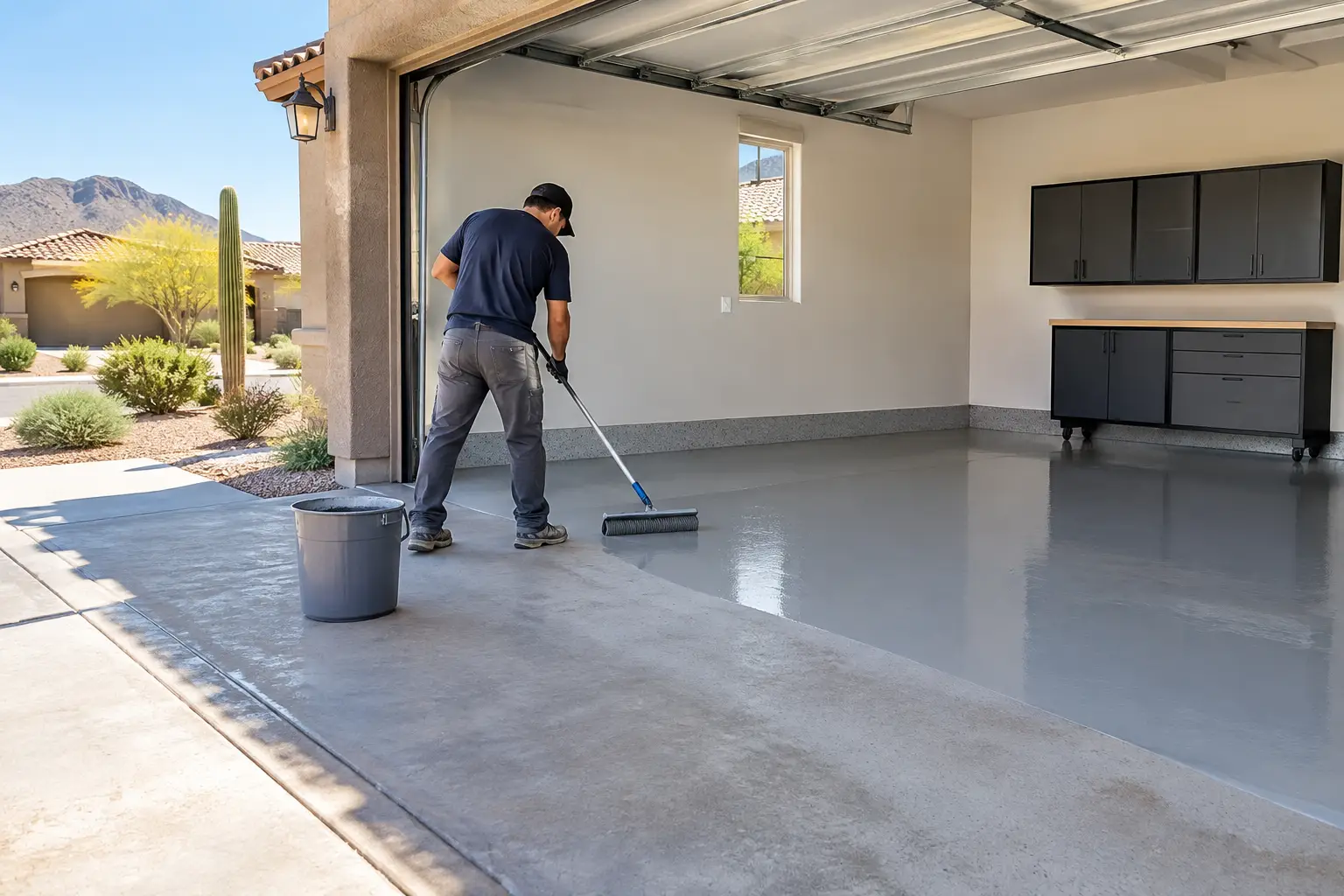
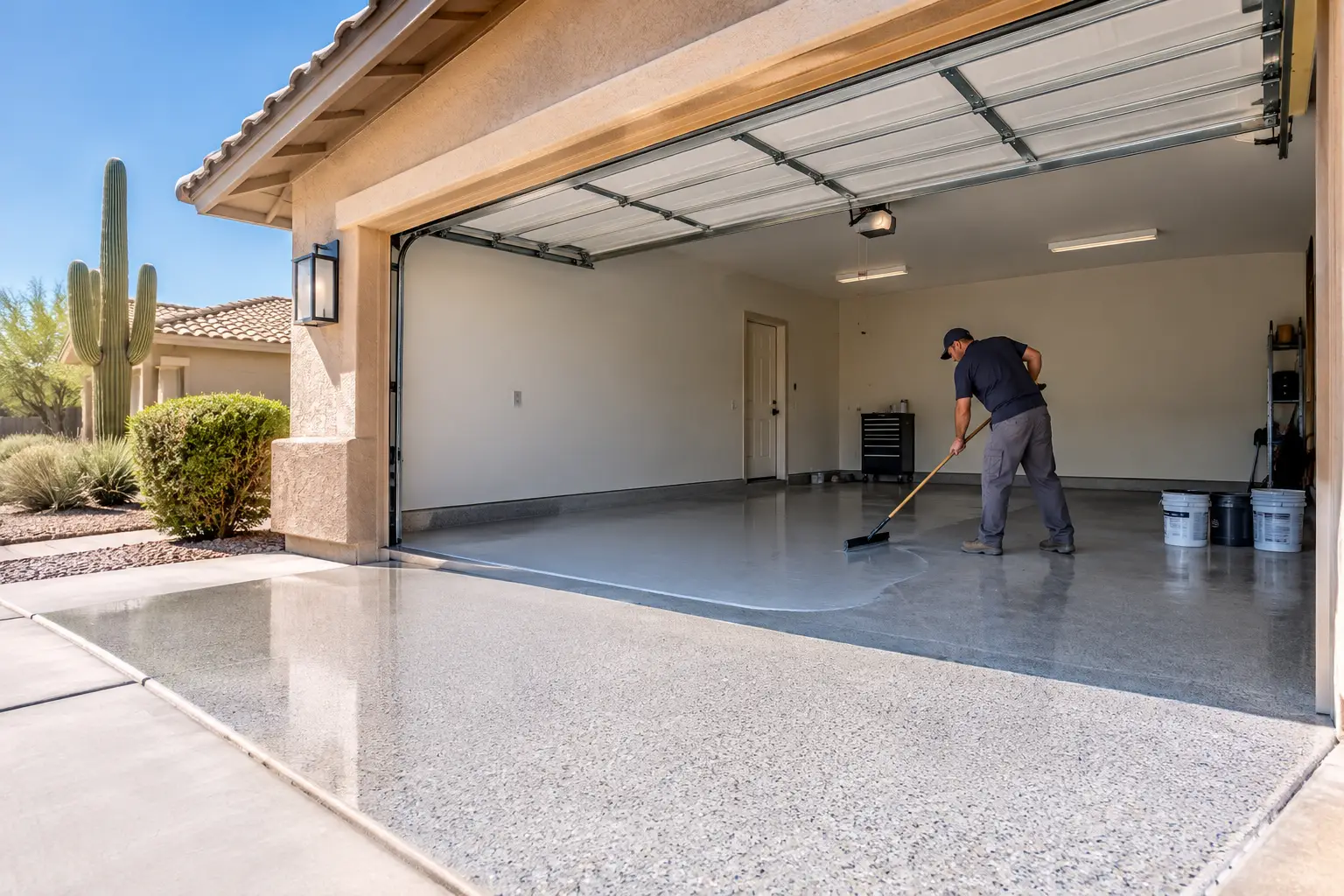
Cleaning habits matter, but there is a limit to what bare concrete can handle. If you want a garage floor that is easier to maintain, a professionally installed coating creates a protective barrier between spills and the slab. Instead of absorbing oil or grime, the coated surface allows most everyday messes to remain on top long enough to wipe or mop away.
For Arizona garages, the chemistry and installation process matter. Basic epoxy systems can be vulnerable to UV exposure, heat-related issues, and adhesion failure when surface preparation is skipped. A quality 100% polyaspartic system is designed for demanding conditions, cures quickly, and provides strong resistance to staining, abrasion, and hot-tire pickup when installed correctly.
The phrase “when installed correctly” is not a technicality. Coatings depend on the concrete underneath them. The floor needs to be mechanically prepared so the coating can bond properly. Cracks should be addressed. Moisture conditions, edges, and surface defects all need attention before the first coat goes down. No shortcuts and no skipped steps are what separate a floor that holds from one that peels.
A decorative flake system also has a practical benefit beyond appearance. It helps visually disguise light dust and everyday specks between cleanings while giving the garage a finished, intentional look. For many homeowners, that means the garage becomes a usable extension of the home instead of a space they avoid showing guests.
Keep a Coated Garage Floor Looking Its Best
A coating reduces the work, but it does not eliminate basic care. Sweep regularly to remove abrasive grit. Wipe up chemical spills promptly. Use a soft mop or squeegee with a mild cleaner for periodic washing, and avoid harsh abrasive pads that can dull the finish.
Heavy equipment, sharp metal edges, and welding work still call for protection. Place pads under jack stands, use a welding blanket when needed, and avoid dragging loaded metal cabinets across the floor. A durable coating is made for real use, not neglect.
TRM Garage Floors installs polyaspartic systems with thorough preparation and a final walkthrough, so East Valley homeowners can get a floor built for everyday vehicles, storage, projects, and Arizona heat. The result is typically a one-day installation with vehicle traffic restored the following morning.
A garage floor will always see spills, dust, and hard use. The difference is whether those everyday events become permanent stains or a quick cleanup before you get on with your day.
TRM Garage Floors installs 100% polyaspartic coating systems for garages, patios, and commercial spaces across the East Valley. Free estimates, done in one day.