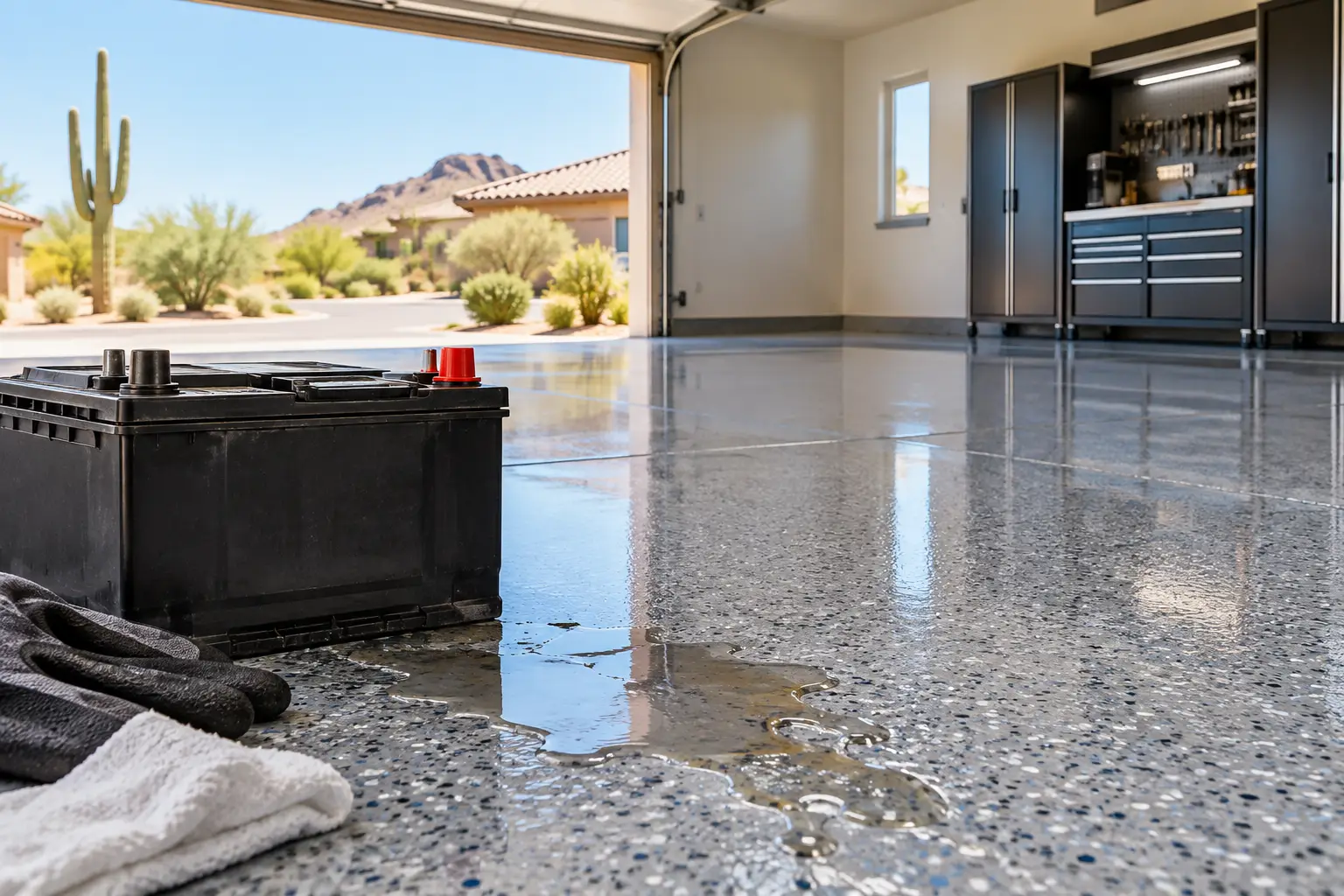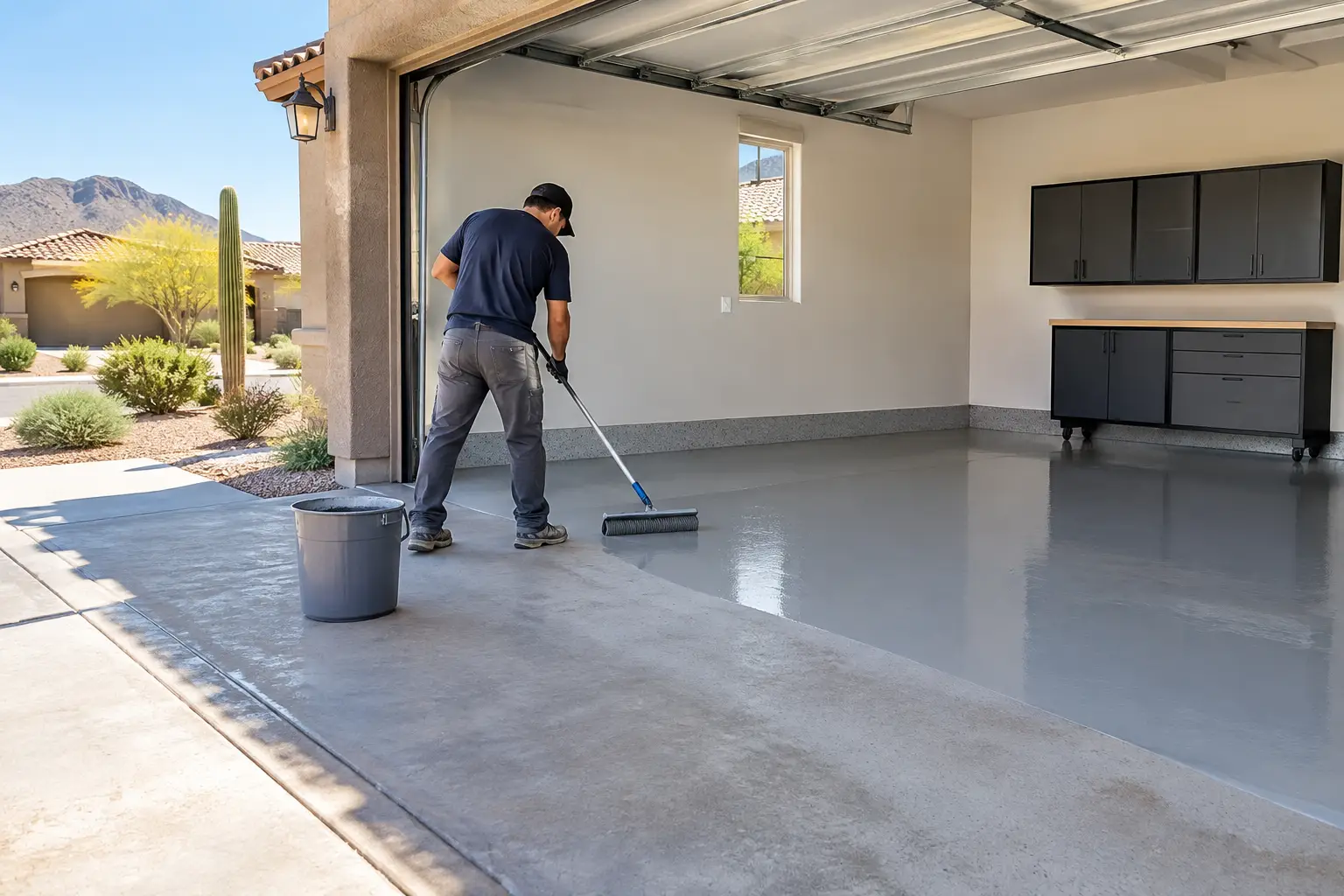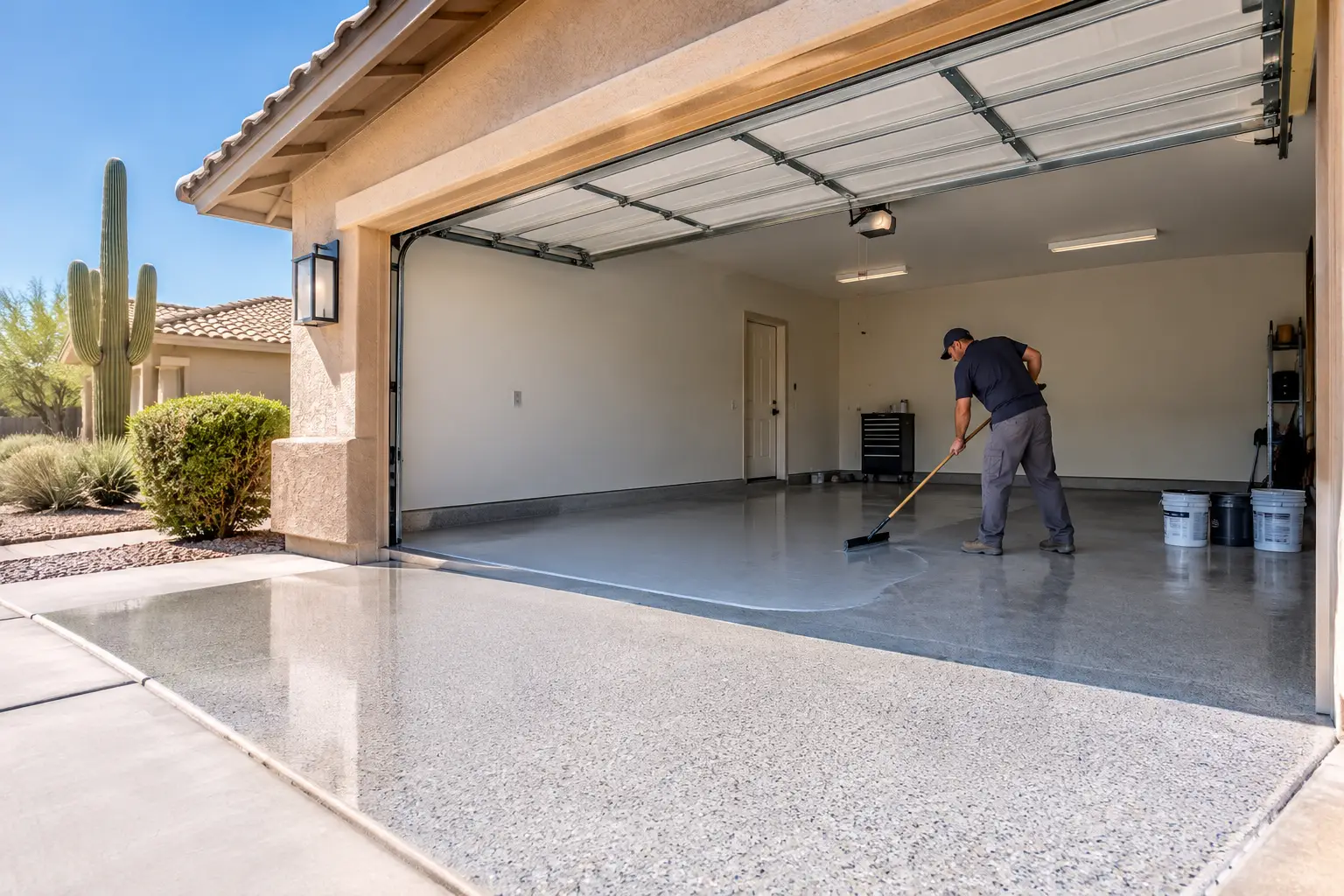
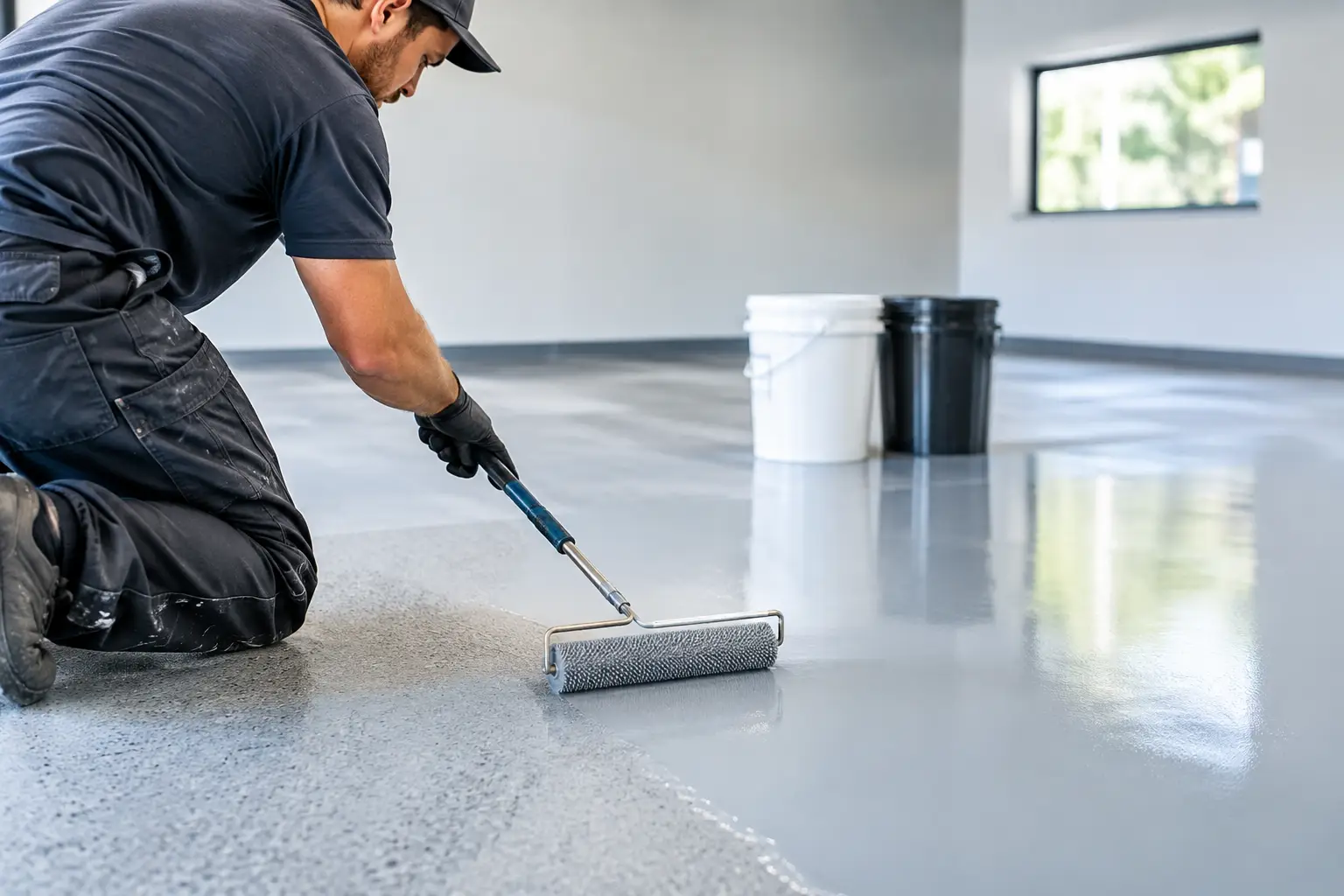
A polyaspartic installer review should tell you more than whether a garage floor looks good in a photo. In Arizona, the real test is what happens after hot tires roll in, summer sun hits the concrete, lawn equipment gets parked, and everyday spills need to be cleaned up. A coating can look great on installation day and still fail early if the concrete was not prepared correctly or the system was not suited to the surface.
For homeowners and property managers in the East Valley, choosing an installer is less about finding the lowest quote and more about understanding what that quote includes. The right contractor should be able to explain the process in plain language, identify concrete issues before coating begins, and stand behind the work after the floor has cured.
What a Useful Polyaspartic Installer Review Should Cover
Online ratings are a helpful starting point, but they are not the full picture. Read beyond the star count. Look for details about communication, arrival times, concrete preparation, cleanup, and how the finished floor has held up. A review that says the crew was friendly is good. A review that explains the team repaired cracks, kept the homeowner informed, completed the job on schedule, and left a clean work area is more useful.
Pay attention to whether reviews mention the type of project. A garage floor has different demands than a covered patio, pool deck, warehouse, auto shop, or retail showroom. Exterior concrete has to handle UV exposure and changing temperatures. Commercial spaces may need to return to service quickly while standing up to carts, foot traffic, forklifts, or vehicle traffic.
Recent reviews matter, but so do reviews written months or years after installation. Ask the contractor if they can discuss projects similar to yours and describe the system used. A professional installer should not become vague when the conversation turns from color flakes to surface preparation and product performance.
The Floor Is Only as Good as the Preparation
Concrete preparation is where quality installations separate themselves from quick coatings. Concrete is not a clean, uniform surface. It can hold oil, moisture, curing compounds, old paint, dust, and weak surface material. If a coating is applied over those problems, adhesion can suffer no matter how premium the topcoat is.
A qualified installer should inspect the slab before promising a result. They should look for cracks, spalling, previous coatings, moisture concerns, tire wear, staining, and areas where the concrete surface is soft or dusty. Hairline cracks and larger movement cracks are not the same issue, and neither should be treated with a one-size-fits-all answer.
Mechanical diamond grinding is commonly used to create the proper surface profile for a coating system. This is not the same as simply cleaning the floor or lightly scuffing it. Grinding removes contaminants and weak material while giving the coating a surface it can grip. Dust control also matters. A crew that takes preparation seriously will use professional equipment and keep the work area orderly.
Be cautious if an estimate focuses heavily on decorative flakes but barely addresses prep. Flakes add color, texture, and visual coverage. They do not solve a poorly prepared slab.
Ask What Is Actually Being Installed
The word “polyaspartic” is used broadly in flooring marketing. Some systems use polyaspartic materials in key coats. Others may combine products or use a lower-grade coating while presenting the entire installation as polyaspartic. There is nothing wrong with using a system designed for a specific condition, but the contractor should be clear about it.
Ask what product is used for the base coat and topcoat, how the coating is built up, and why that system fits your project. For a garage, you want a coating that can handle heat, hot tires, stains, dropped tools, and frequent cleaning. For an outdoor space, UV stability and traction deserve extra attention. For commercial concrete, cure time, abrasion resistance, and expected traffic are often central to the decision.
A 100% polyaspartic system can offer fast curing, strong adhesion when installed over properly prepared concrete, and good resistance to UV exposure. That makes it a practical choice for many Arizona projects. Still, chemistry alone is not a guarantee. The installer must account for slab condition, temperature, humidity, repair needs, and the purpose of the space.
Compare Scope, Not Just Price
Two estimates can have very different prices because they include very different work. The lowest number may leave out crack repair, grinding, moisture evaluation, stem-wall coating, surface protection, or a full-broadcast flake system. It may also rely on a thinner application or less durable materials.
A clear proposal should state the project area, preparation method, repair work, coating system, color selection, anticipated schedule, and when the surface can return to use. If a garage needs to be empty before work begins, the contractor should make that expectation clear. If there are items that need special protection or areas that cannot be coated, those should be discussed before installation day.
Do not assume “one-day floor” means every floor is identical or that it can be driven on immediately. One-day installation generally refers to completing the application process in a single day. Vehicle traffic is often restored the following morning, but actual cure timing depends on the product system and job conditions. A reliable installer will give you specific instructions rather than a casual guess.
Review the Installer’s Repair and Safety Approach
Cracks are common in Arizona concrete. Some are cosmetic and can be filled before coating. Others may reflect movement that could continue. An honest contractor will explain the difference and set realistic expectations. Coatings can improve the appearance of repaired cracks, but they cannot stop a slab from moving.
For patios and pool-adjacent spaces, discuss slip resistance directly. A coating can be easier to clean and more comfortable-looking than bare concrete, but texture choices matter around water. More texture can improve grip, while too much texture may make cleaning more difficult. The best choice depends on whether the space is a quiet covered patio, a busy pool deck, a workshop entrance, or a commercial walkway.
Safety also includes the jobsite. Professional crews should control grinding dust, respect your home or business, protect adjacent surfaces, and keep you informed if they uncover an issue. No shortcuts, no skipped steps is not just a slogan. It is visible in how the crew handles preparation, repairs, edges, transitions, and final cleanup.
Questions to Ask Before You Hire
You do not need to be a coating expert to evaluate an installer. Ask how they prepare concrete, how they handle cracks and prior coatings, what materials are included, and when you can walk or drive on the surface. Ask whether they use a broadcast flake system, how they address exterior UV exposure, and what the warranty covers.
Also ask who will be onsite. Some companies sell the project and pass it to an unfamiliar subcontractor. Others have trained in-house crews and direct owner involvement. Neither business model automatically determines quality, but you deserve a clear answer about who is responsible for the work and who will respond if you have a concern.
A pressure-free, on-site estimate is often the best time to judge communication. The contractor should measure the space, inspect the concrete, listen to how you use it, and explain options without overselling. At TRM Garage Floors, that conversation is built around the slab in front of us, not a generic package that ignores Arizona conditions.
A Good Polyaspartic Installer Review Starts With the Final Walkthrough
The final walkthrough is a small step with a big purpose. Before the crew leaves, you should have the chance to look over the finished surface, ask about care, and understand the return-to-service schedule. The installer should point out repaired areas, explain any visible variation that is normal with concrete and decorative flakes, and make sure the project meets the agreed scope.
Your new coating should make the space easier to use, not create a new maintenance problem. Most coated floors need simple care: sweep away abrasive dirt, wipe spills in a reasonable time, and use a mild cleaner when needed. Avoid dragging sharp metal objects or using harsh products unless the installer confirms they are appropriate.
The best choice is the contractor who treats your concrete as a working surface, not just a backdrop for a sales photo. Choose the installer who inspects carefully, explains the trade-offs, prepares thoroughly, and is still accountable after the floor is back in service.
TRM Garage Floors installs 100% polyaspartic coating systems for garages, patios, and commercial spaces across the East Valley. Free estimates, done in one day.