A concrete floor can look fine until it starts leaving dust on everything in the garage, absorbing oil stains, or showing tire marks that will not scrub out. In the East Valley, bare slabs also take a daily beating from heat, UV exposure, moisture, and heavy use. The right floor coatings turn that porous concrete into a surface that is easier to clean, safer to walk on, and built to hold up under real Arizona conditions.
That does not mean every coating is the same. A coating is only as reliable as the product, the concrete preparation, and the installer’s willingness to do the steps that are easy to skip. No shortcuts, no skipped steps.
What a Quality Floor Coating Actually Does
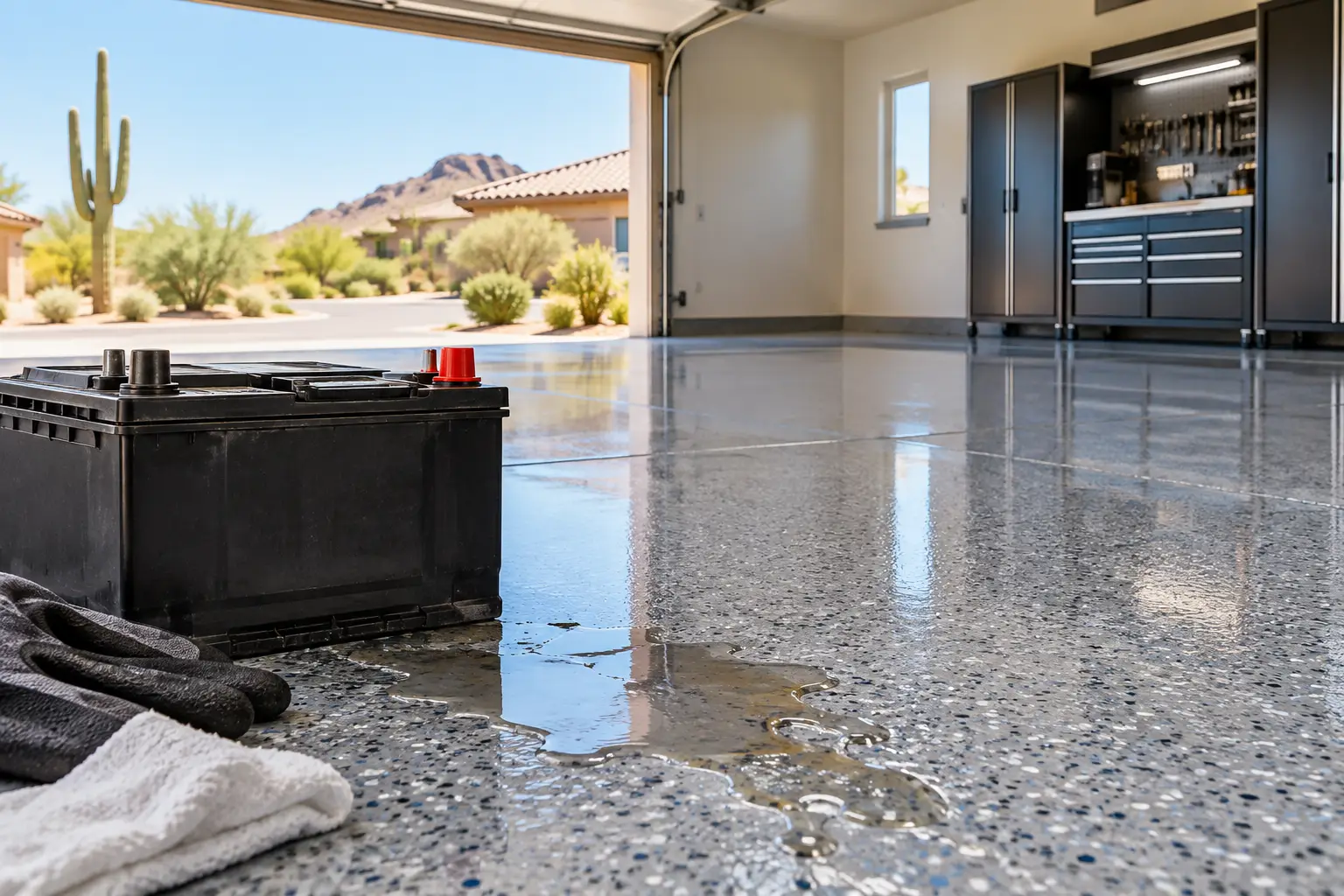
Concrete is tough, but it is not sealed by nature. Its pores collect dirt, oil, chemicals, moisture, and fine dust. Over time, an unfinished garage floor can look permanently dirty even after a thorough cleaning. On patios and pool decks, weather and foot traffic can leave the surface faded, rough, or slippery when wet.
A professionally installed coating system creates a protective layer over the concrete. It helps resist staining, reduces dusting, and gives the floor a finished appearance that fits the rest of the property. Decorative flakes can add color and visual depth while also helping disguise everyday dust and small marks between cleanings.
For homeowners, the practical difference is usually immediate. A garage becomes a space that is easier to organize and maintain, not a concrete slab that always looks unfinished. For a warehouse, shop, or showroom, a coated floor can improve cleanability and presentation without requiring a long shutdown.
Why Floor Coatings Need to Be Built for Arizona
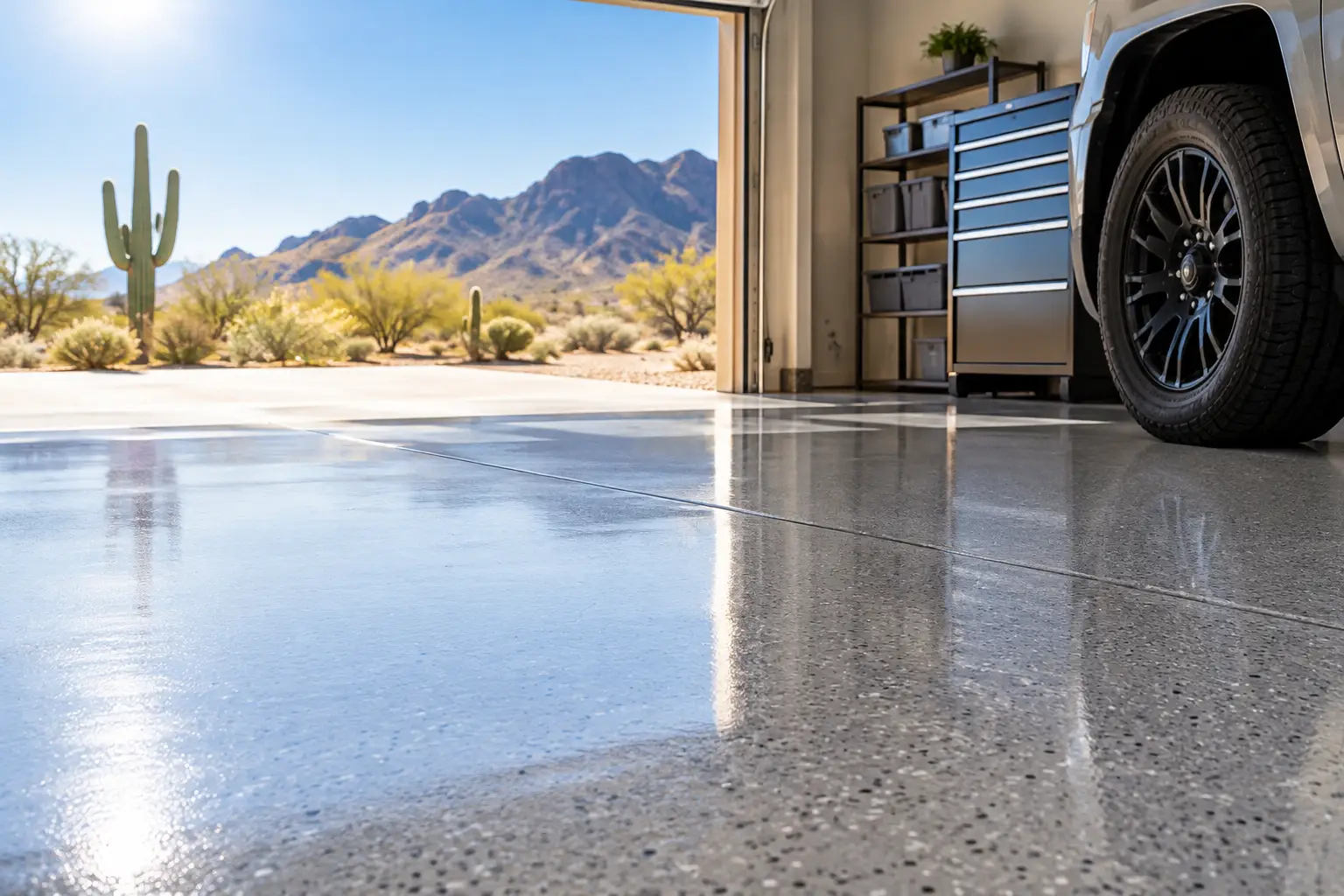
Arizona heat exposes weak coating systems quickly. A garage floor can become extremely hot, particularly near the door opening. Tires that have been heated by the road can transfer heat directly to the slab, and lower-grade coatings may soften, discolor, or pull away. This is commonly called hot-tire pickup.
UV exposure matters outdoors, too. Some basic epoxy systems can amber, fade, or break down when exposed to regular sunlight. That may be less noticeable in an enclosed garage, but it is a major consideration for patios, covered outdoor spaces, pool decks, and driveway-adjacent areas.
This is where polyaspartic chemistry earns its place. A 100% polyaspartic system is designed for strong adhesion, fast curing, and better UV stability than many standard epoxy options. It is not a magic fix for damaged concrete, but it gives a properly prepared slab a much better chance of performing through intense sun, temperature swings, spills, and vehicle traffic.
The best system also depends on where it is going. A garage may prioritize stain resistance and hot-tire performance. A pool deck needs texture and traction when wet. A commercial floor may need to withstand forklifts, carts, machinery, or frequent cleaning. One coating approach does not fit every surface.
Preparation Is Where the Job Is Won or Lost
The color flakes get attention, but preparation determines whether the coating stays bonded to the concrete. If a floor has old paint, failed epoxy, oil contamination, moisture issues, or a weak top layer, coating directly over it is a gamble.
Professional preparation starts with evaluating the slab. Cracks, spalling, previous coatings, stains, and surface condition all affect the installation plan. Cracks should be addressed before coating, with the understanding that active structural movement can still create future movement lines. A coating improves and protects the surface, but it cannot stop a foundation from moving.
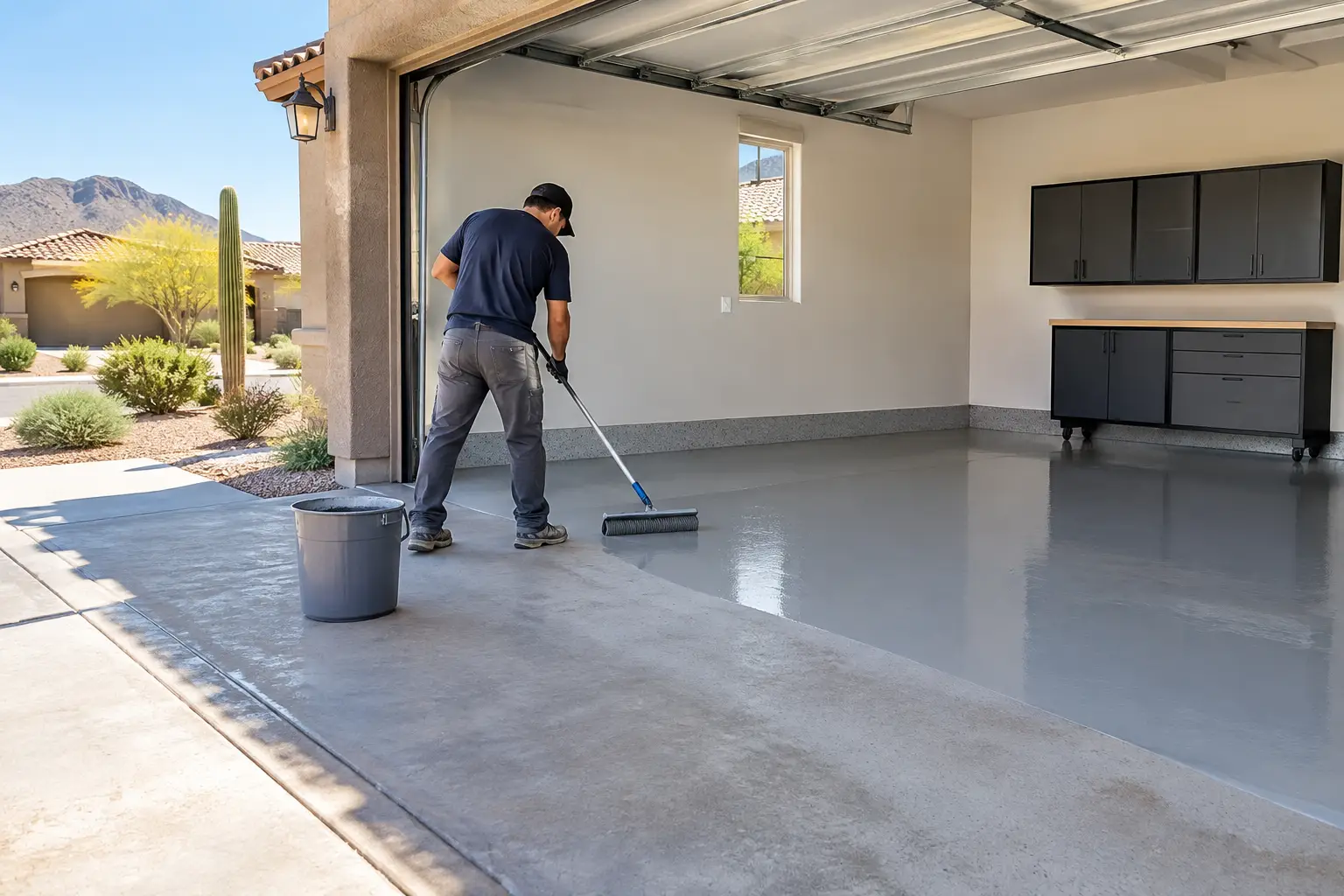
Next comes mechanical surface preparation. Diamond grinding opens the concrete pores and removes weak material so the coating can bond to a clean, sound profile. This is very different from simply acid etching or pressure washing. A floor may look clean after washing, yet still lack the profile needed for long-term adhesion.
After grinding, the surface needs careful cleanup. Dust, loose material, and debris cannot be left behind. Repairs are completed, the base coat is applied, decorative flakes are broadcast when included in the system, and excess flakes are removed before the protective topcoat goes down.
Each stage has a purpose. Skipping one may save time on installation day, but it often creates peeling, bubbles, thin spots, or premature wear later. A good installer should be able to explain the process in plain language and show you what your concrete needs before quoting the work.
Choosing the Right Surface and Finish
A floor coating should suit how the space is actually used, not just how it looks in a photo. A full-flake garage finish is popular because it hides dirt well, adds visual interest, and creates a polished, uniform appearance. It works especially well in garages used for vehicles, storage, home gyms, or hobby spaces.
For patios and pool decks, traction deserves more attention. A glossy, smooth finish may look sharp, but it is not always the right choice around water. Texture can be added to improve footing while keeping the surface easy to rinse and maintain. The goal is a finish that feels practical under bare feet and wet shoes, not one that simply photographs well.
Commercial spaces often require a more specific conversation. A retail showroom may prioritize appearance, while a warehouse may prioritize abrasion resistance, cure time, and minimal operational downtime. Vehicle weight, point loads, chemical exposure, cleaning methods, and traffic patterns all matter before a system is selected.
Color is also a functional decision. Mid-tone flake blends tend to be forgiving in garages and shops because they conceal dust and small debris better than a solid, very light color. Outdoor spaces may benefit from colors that work with the home’s stucco, hardscape, and existing finishes without becoming overly bright in direct sun.
What Installation Day Should Look Like
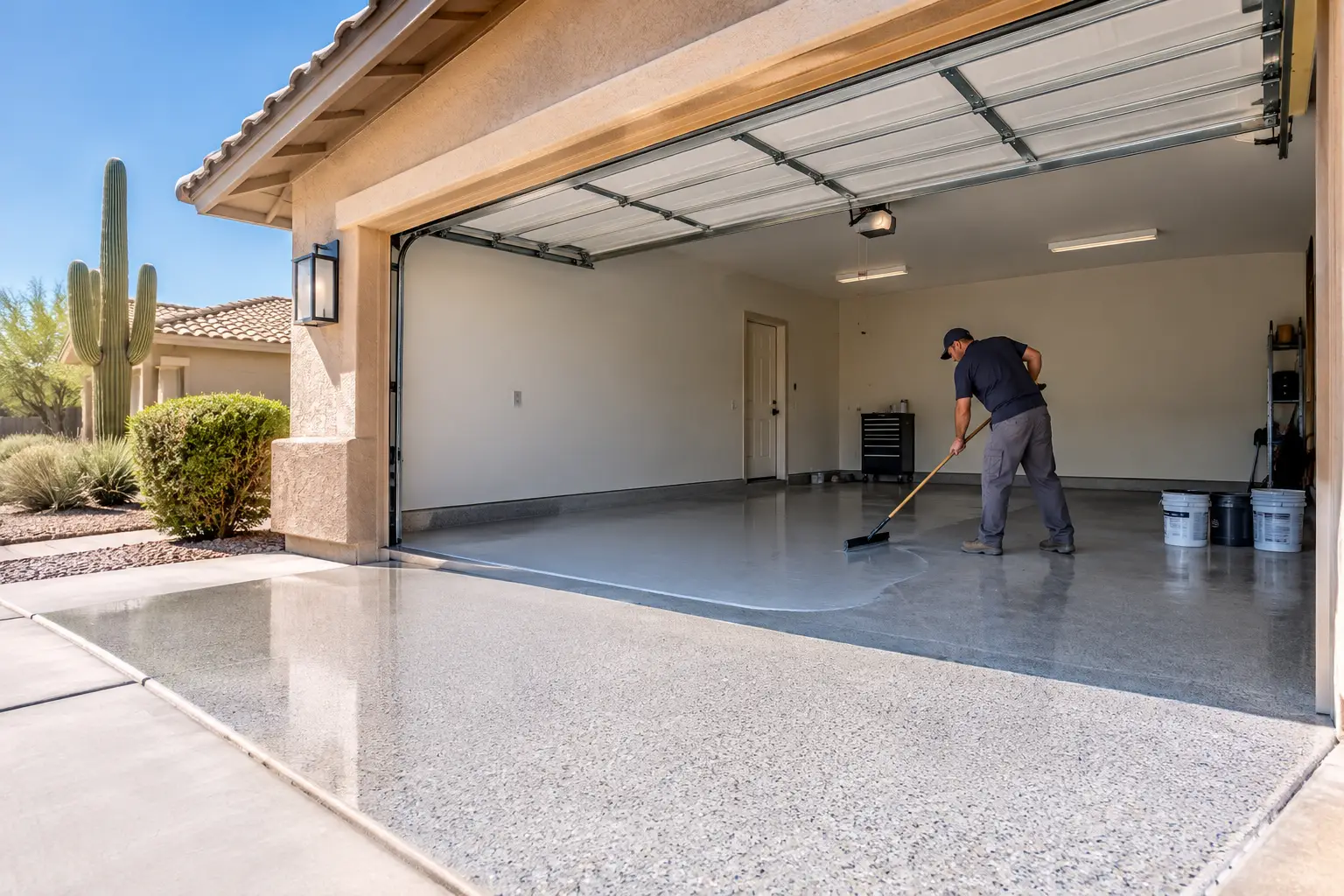
A disciplined coating installation is organized, not rushed. The crew should protect nearby areas, prepare the concrete mechanically, repair the surface as needed, apply each layer according to the system, and clean the jobsite before leaving. The final result should not be a surprise at the end of the day.
One advantage of polyaspartic systems is fast curing. Many residential garage floors can be completed in one day, with vehicle traffic typically restored the following morning. That is a meaningful difference for homeowners who cannot leave vehicles or belongings displaced for several days.
Fast cure time does not excuse poor workmanship. The coating still needs the right surface profile, appropriate temperature and moisture conditions, correct material coverage, and enough attention to edges and details. A hurried job can look good at first and still fail where it counts.
Before the crew leaves, ask for a final walkthrough. Look at transitions, edges, repaired areas, coverage near walls, and the overall consistency of the finish. This is the time to ask questions about return-to-use timing, cleaning, and any specific considerations for your surface.
Keeping a Coated Floor Looking Good
Most coated floors are simple to maintain. Sweep or blow out loose debris regularly, especially sand and grit that can act like sandpaper under foot or tire traffic. For routine cleaning, use a soft broom, mop, or squeegee with a mild cleaner and water. Avoid harsh products unless the installer confirms they are appropriate for the system.
Wipe up spills when they happen, even though the coating is stain resistant. Oil, chemicals, and standing water are easier to manage when they are not allowed to sit. Place protective pads under very heavy stationary equipment, and use care when dragging metal items across the floor.
A coated floor is durable, not indestructible. Sharp impacts, aggressive abrasion, or severe concrete movement can still cause damage. The difference is that a professionally installed system gives you a surface designed to handle normal daily use without the constant dust, staining, and unfinished look of bare concrete.
If you are comparing options for a garage, patio, pool deck, or commercial space, start with the condition of the concrete and the demands of the area. TRM Garage Floors can evaluate the slab on-site and explain what a properly prepared polyaspartic system can realistically do. The right coating should make the space easier to use every day, not give you another surface to worry about.
TRM Garage Floors installs 100% polyaspartic coating systems for garages, patios, and commercial spaces across the East Valley. Free estimates, done in one day.