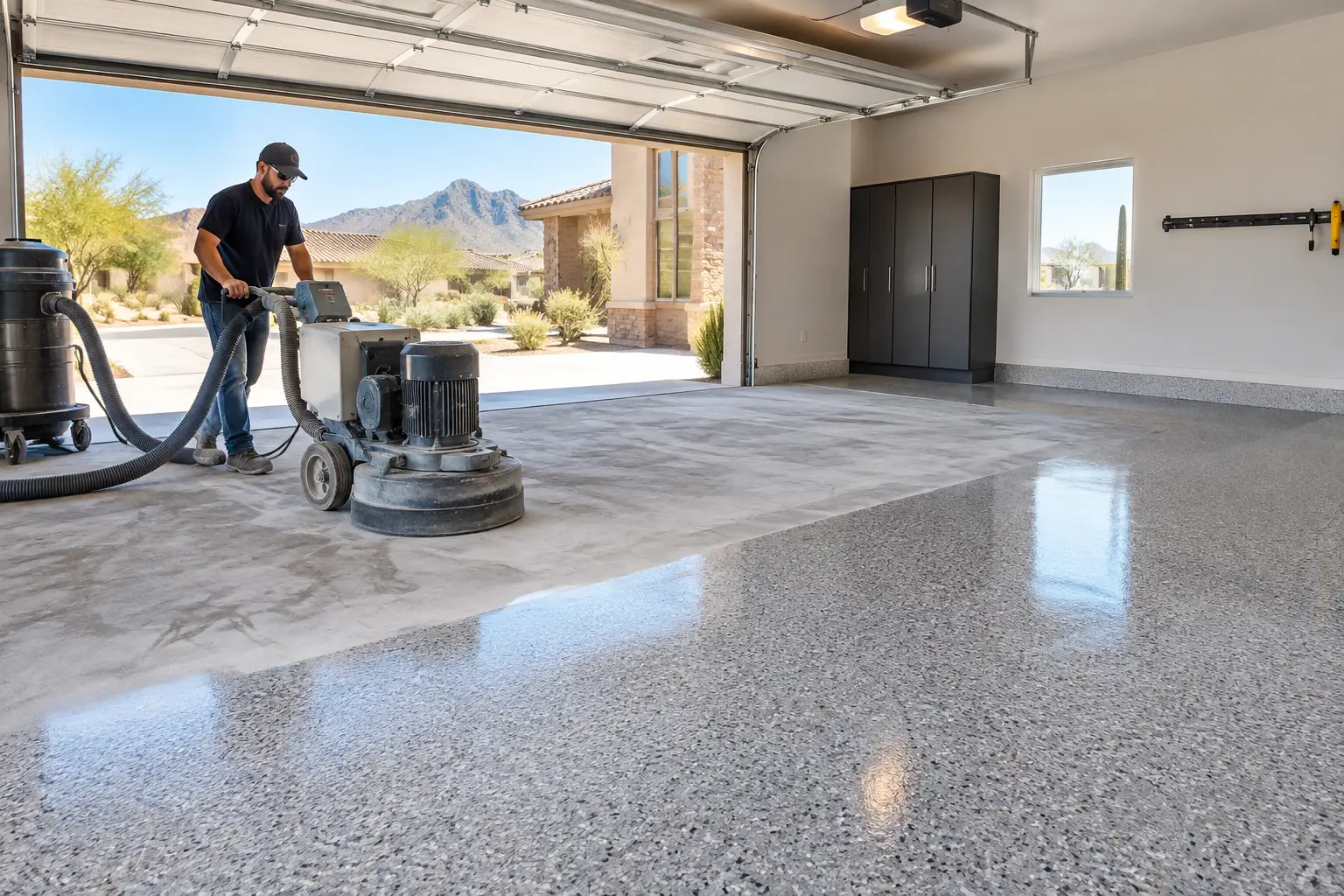
A garage in Encanterra often does more than hold cars. It may be the entry point after a round of golf, a place for tools and bikes, or the spot where an organized home starts to feel finished. An Encanterra garage floor upgrade should match that standard. The goal is not simply to make gray concrete look better for a few months. It is to install a floor that handles Arizona heat, hot tires, spills, and regular daily use without peeling, yellowing, or becoming hard to clean.
That comes down to the coating system and, even more, the preparation underneath it. A good-looking floor is easy to photograph on installation day. A floor that stays bonded to the concrete is what homeowners are actually paying for.
What a Garage Floor Upgrade Should Solve
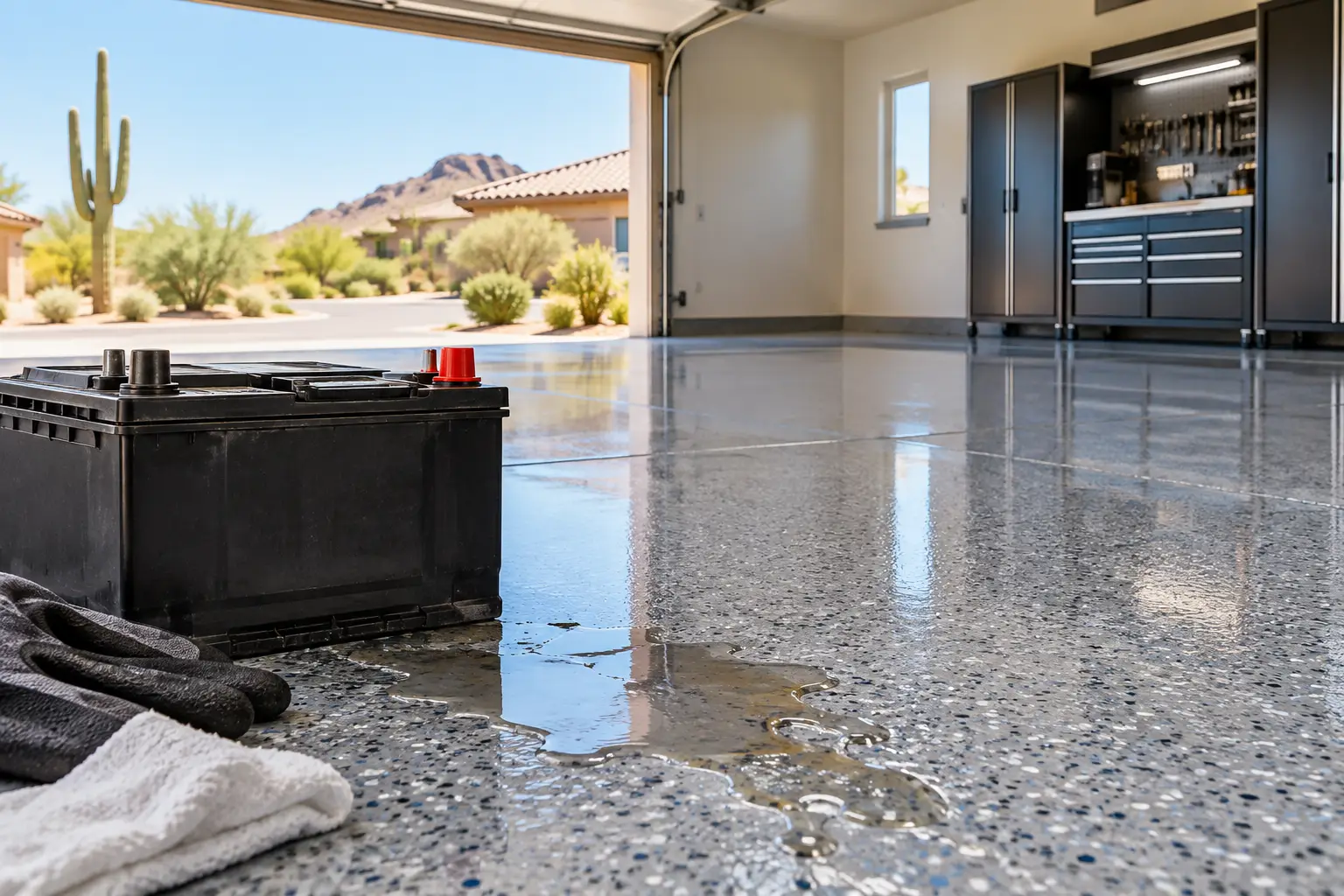
Bare garage concrete is practical, but it is not maintenance-free. It absorbs oil, dirt, fertilizer residue, and the fine dust that seems to find every Arizona garage. Over time, surface wear, small cracks, tire marks, and stains can make an otherwise clean garage look neglected.
A professionally installed flake floor addresses the everyday issues homeowners notice first. The full flake broadcast creates a finished appearance that hides minor dust and day-to-day marks better than plain concrete. The protective topcoat makes the floor easier to sweep, blow out, or mop. It also helps protect the slab from common household spills and vehicle fluids.
Appearance matters, especially in a well-kept Encanterra home, but durability should lead the decision. A coating that looks great but lifts under a tire or flakes away at the edges is not an upgrade. It is a redo waiting to happen.
Why Arizona Preparation Matters More Than a Pretty Sample Board
Every coating contractor can show color samples. The more useful question is how they prepare the actual concrete in your garage.
Concrete is not a clean, uniform surface. It can have hard troweled areas, weak surface paste, old paint, curing compounds, small chips, hairline cracks, and contaminants that are not obvious until work begins. In Arizona, garages can also see extreme temperature swings and plenty of hot-tire traffic. A coating needs a properly prepared profile so it can mechanically bond to the slab.
Professional diamond grinding is the right starting point for most residential garage floors. Commercial-grade grinders remove the weak top layer and open the concrete evenly. The work should include edge grinding along the walls, where larger equipment cannot reach. Simply acid etching or giving the floor a quick cleaning may sound convenient, but it does not provide the same level of mechanical preparation.
Dust control matters, too. A contractor should use proper dust-collection equipment during grinding and leave the garage cleaner than a typical construction project. Grinding creates a lot of fine concrete dust. Letting it drift through the garage and into the home is not a sign of efficient work.
A 100% Polyaspartic System Is Built for Garage Use
Many homeowners begin their search using the word “epoxy” because it is the most familiar term. Epoxy can be appropriate in certain applications, but it is not the only option and it is not what TRM Garage Floors installs in residential garages.
A 100% polyaspartic system uses polyaspartic material from the base coat through the protective topcoat. It is designed for a fast professional installation, strong adhesion when the slab is properly prepared, and the kind of UV stability that matters in Arizona. Garages with sun exposure near open doors benefit from a system that is less likely to discolor over time.
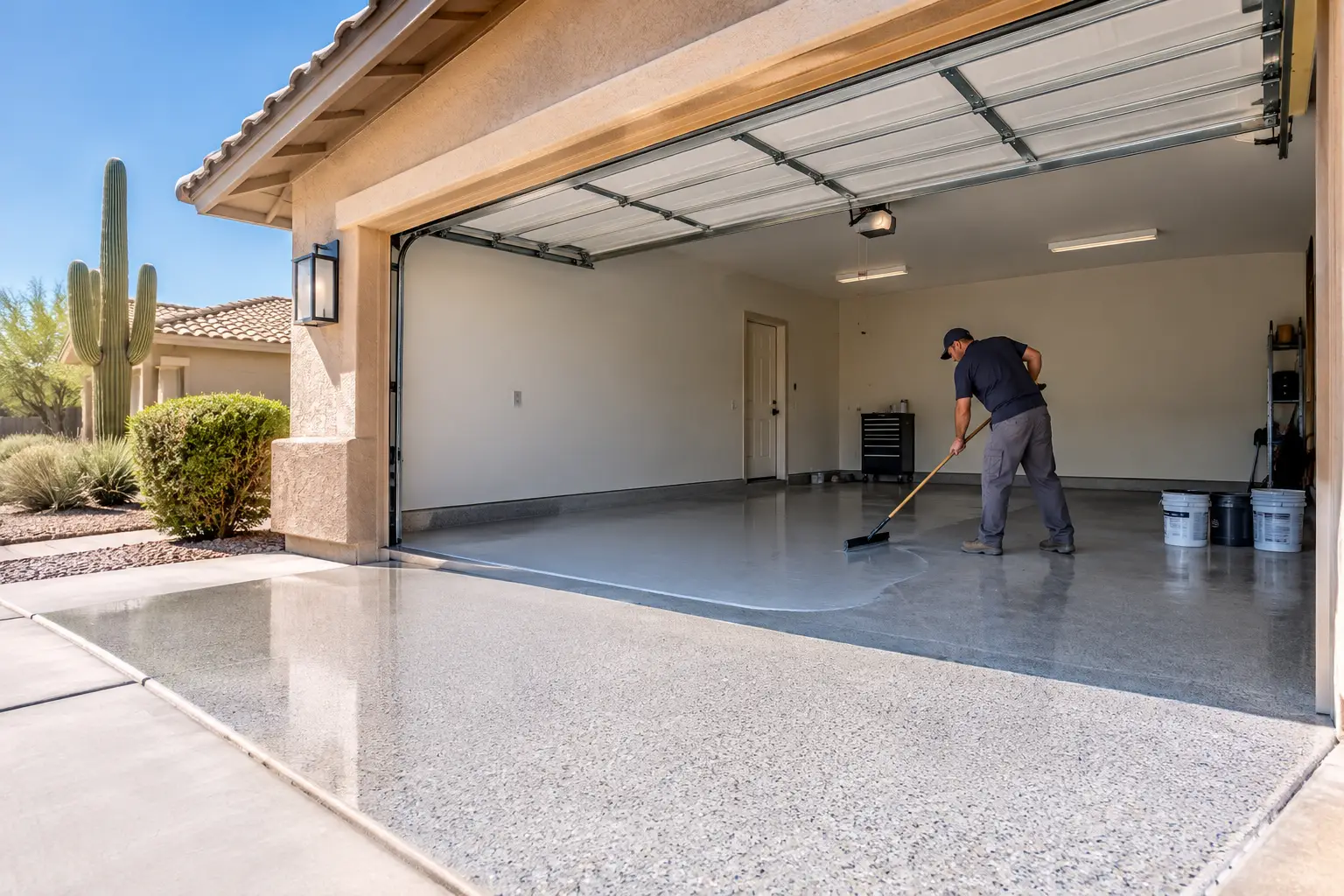
Polyaspartic also allows a trained crew to complete many garage floors in one day, with a quick return to use after curing. That does not mean the work is rushed. It means the materials are suited to a planned, properly sequenced installation.
The trade-off is that fast-curing materials leave less room for sloppy preparation or indecision. Concrete repairs, moisture concerns, and floor condition need to be evaluated before coating begins. This is one reason an on-site estimate is more useful than a price tossed out over the phone after hearing “two-car garage.”
What a Professional Encanterra Garage Floor Upgrade Includes
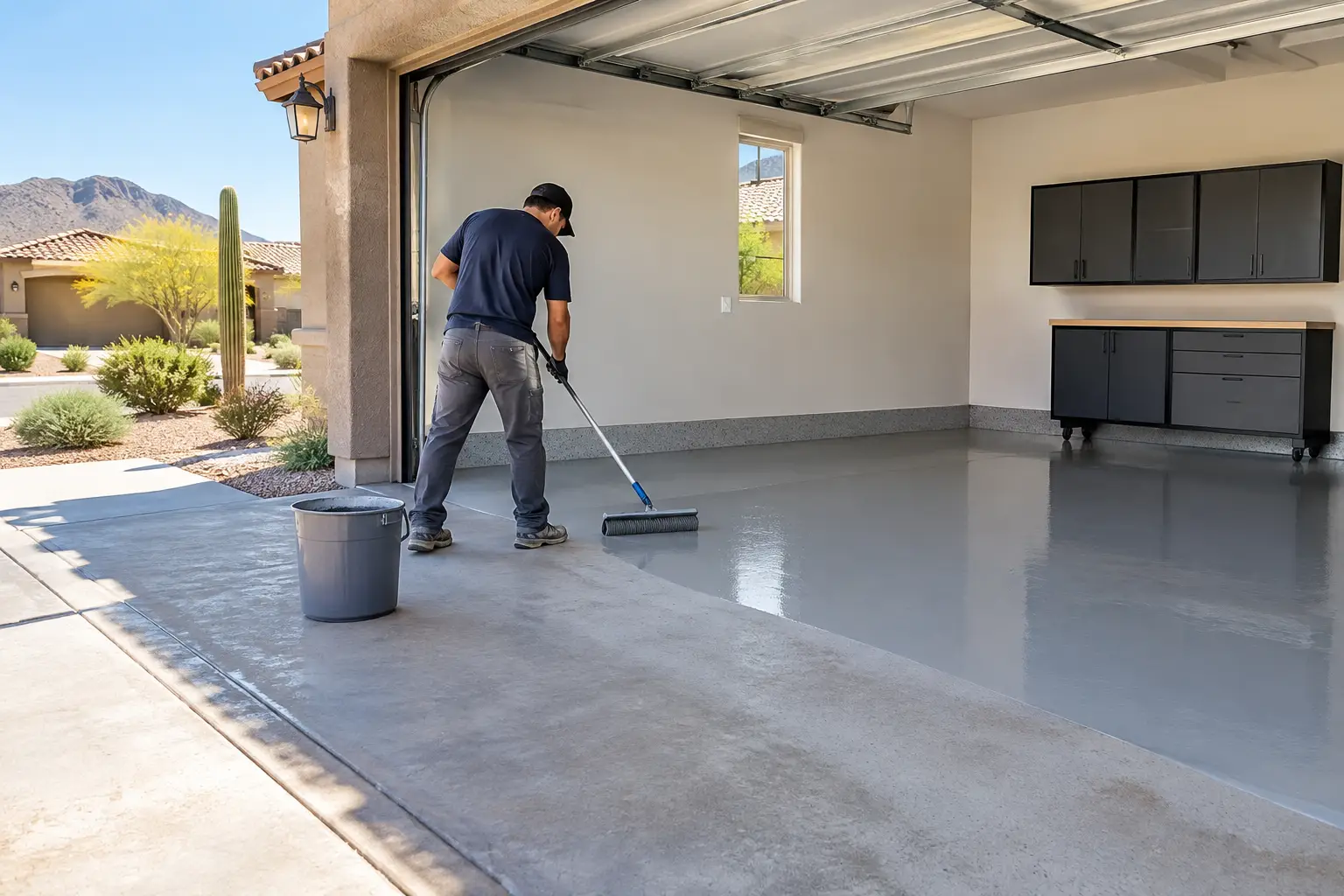
A clear proposal should explain the work, not leave you guessing what is included. The exact process can vary with the condition of the slab, but a complete garage floor installation generally includes concrete evaluation, diamond grinding, crack and surface repair where needed, detailed cleaning, a polyaspartic base coat, full flake broadcast, removal of excess flakes, scraping, and a protective polyaspartic topcoat.
Full flake broadcast is worth clarifying. It means flakes are applied to rejection, so the floor is covered rather than lightly sprinkled with decorative chips. This creates a more consistent look and a textured surface underfoot. The final topcoat seals it all in.
Slip resistance is another conversation worth having. A flake floor provides texture, but no floor is slip-proof when it is wet. Additional traction options can be discussed if a homeowner wants more grip, particularly near an exterior door or in a garage that sees frequent wet shoes. More texture can improve traction, though it may make the surface slightly less smooth to mop. That is a reasonable trade-off for some households and unnecessary for others.
Repairs Should Be Handled Before the Coating Goes Down
Small cracks and chips are normal in many garage slabs. They should be repaired as part of the preparation process, not covered and hoped for the best. Keep expectations realistic: a repaired crack can be made far less noticeable, but concrete moves, and a structural or actively moving crack may remain faintly visible over time.
A dependable contractor will point this out before starting. Promising that every crack will disappear forever is easy to say and hard to stand behind.
Comparing Estimates Without Chasing the Cheapest Number
Garage coating estimates can vary for valid reasons, including garage size, concrete condition, repair needs, floor layout, access, chosen flake blend, and whether the proposal includes a complete polyaspartic system. The lowest estimate may not include the same level of grinding, repairs, materials, or labor as the next one.
When comparing contractors, homeowners should ask practical questions: Will the concrete be diamond ground? Are edges prepared properly? What material is used for the base coat and topcoat? Is the flake broadcast full coverage? Are cracks and chips included? How long before the garage can be used? Who will be on-site doing the work?
The last question matters. Direct owner involvement creates accountability when an unexpected concrete issue shows up. It is also useful when you want a straight answer about what your particular floor needs, rather than a polished sales pitch followed by a different crew on installation day.
Watch for vague proposals that say only “garage floor coating” with no preparation details. That leaves plenty of room for shortcuts. Frank the Frog would probably call that a slippery patch of lily pads. Homeowners should call it incomplete information.
Planning Around Installation Day
Before the crew arrives, plan to remove vehicles, storage cabinets that sit on the floor, loose items, and anything hanging low enough to interfere with the work area. The garage should be available for the full installation window and curing period. A reputable contractor will provide clear instructions on when you can walk on the floor, move lightweight items back in, and drive vehicles onto it.
If your garage is heavily organized, take photos before clearing it out. That makes putting shelves, tools, and storage back in place easier. It is also a good opportunity to decide whether a few items really need to return. A new floor has a way of making old clutter look more suspicious.
For Encanterra homeowners, the best starting point is a free on-site estimate that looks at the actual slab, its repairs, sun exposure, and the way the garage is used. The right floor should feel like part of the home from day one - clean, durable, and ready for whatever gets parked, stored, or spilled on it next.
TRM Garage Floors installs 100% polyaspartic coating systems for garages, patios, and commercial spaces across the East Valley. Free estimates, done in one day.