If you are getting estimates for a garage floor coating, ask the contractor how they plan to handle the joints and cracks in your specific slab.A good answer should be more detailed than:
“We fill everything before we coat it.”
Why Joint Condition Matters Before Coating a Garage Floor
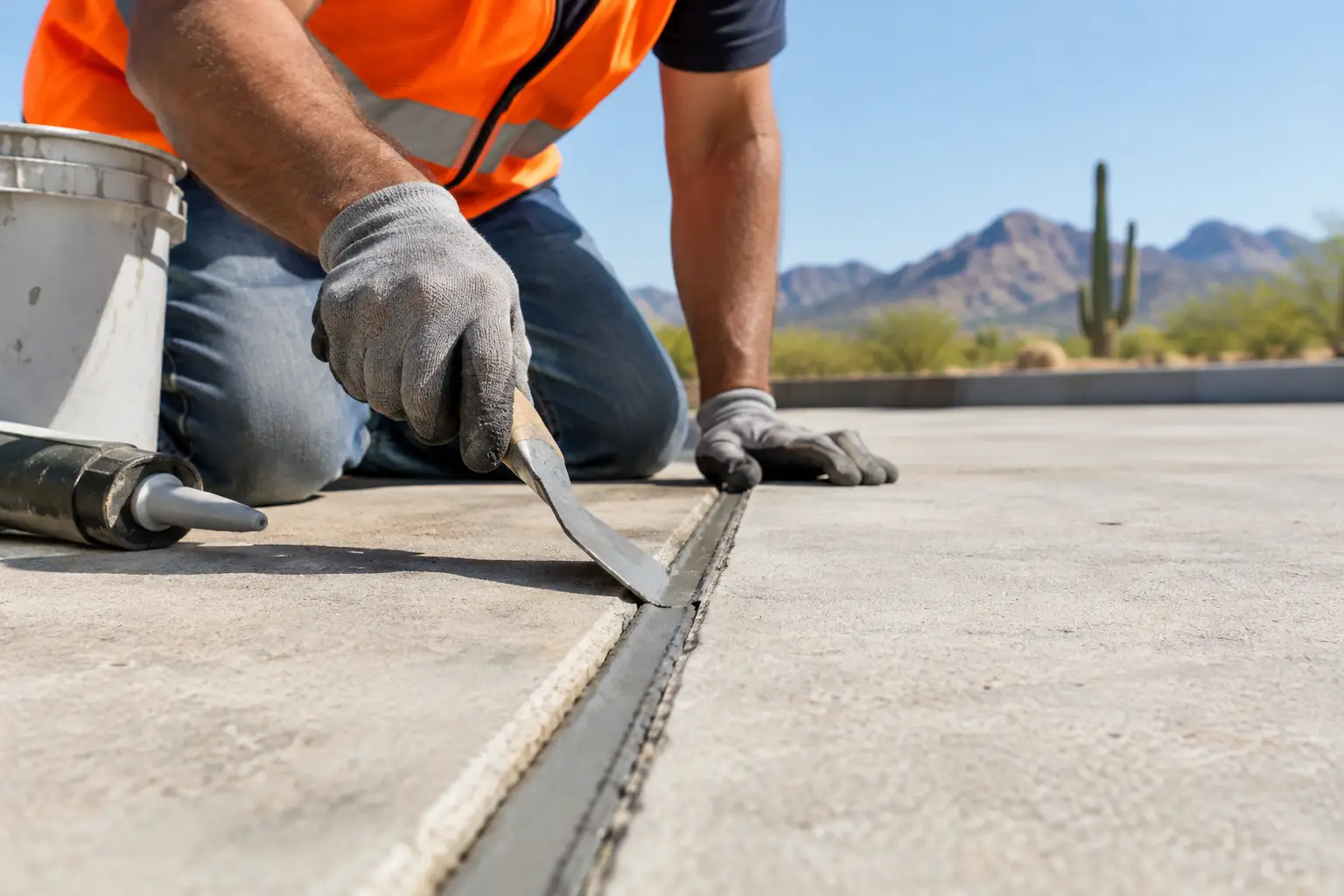
Old expansion joints can collect dirt, sand, oil, moisture, and pieces of deteriorated filler. The concrete along the edges can also begin to chip, crack, or break apart. Simply covering those conditions with coating material does not repair the underlying problem. Damaged edges may need to be rebuilt.Loose or deteriorated material may need to be removed. An active movement joint may need to remain flexible instead of being bridged with a rigid repair. This is why TRM Garage Floors evaluates the actual concrete before installation. We want to know what we are coating before we start talking about colors and decorative flakes.
Should Expansion Joints Be Filled Before a Garage Floor Coating?
Sometimes, but there is no single answer that applies to every garage. The proper approach depends on the type of joint, its width, the condition of the surrounding concrete, and whether movement is expected. Flexible joint materials may be appropriate where movement needs to be maintained. Damaged concrete edges may require a different repair before the joint itself is addressed. What should generally be avoided is filling an active expansion joint with a hard material and assuming the concrete will never move again. A professional garage floor installer should evaluate the joint as part of the entire flooring system.
Diamond Grinding Can Reveal Problems You Could Not See Before
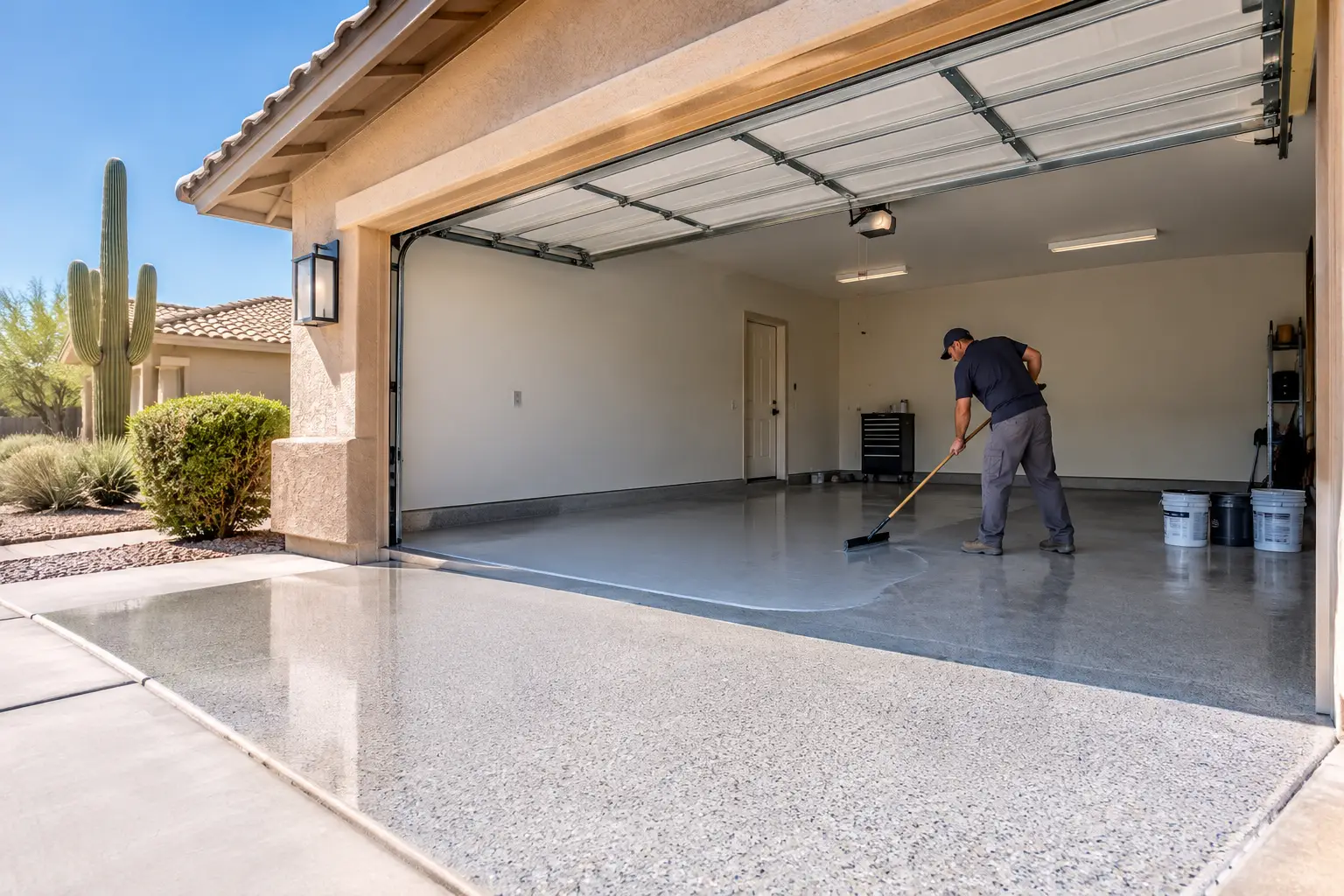
Surface preparation does more than create a profile for the coating to bond to. Professional diamond grinding can also expose old repairs, weak surface material, hidden coatings, sealers, and other concrete conditions that were not obvious during the initial inspection. At TRM Garage Floors, we mechanically diamond-grind the concrete before installing our 100% polyaspartic garage floor system. We do not rely on acid etching or a quick wash as a substitute for mechanical preparation. Once the concrete is properly prepared, cracks, joints, and damaged areas can be evaluated and addressed before the coating system is completed.
What Should Your Garage Floor Contractor Be Looking For?
Before installing a coating, the contractor should be looking at the entire slab, not just measuring square footage.
That includes:
- Expansion joints and control joints. These should be identified so the contractor understands where movement may occur.
- Cracks and damaged concrete. Not every crack is the same, and damaged areas should be evaluated before they are covered.
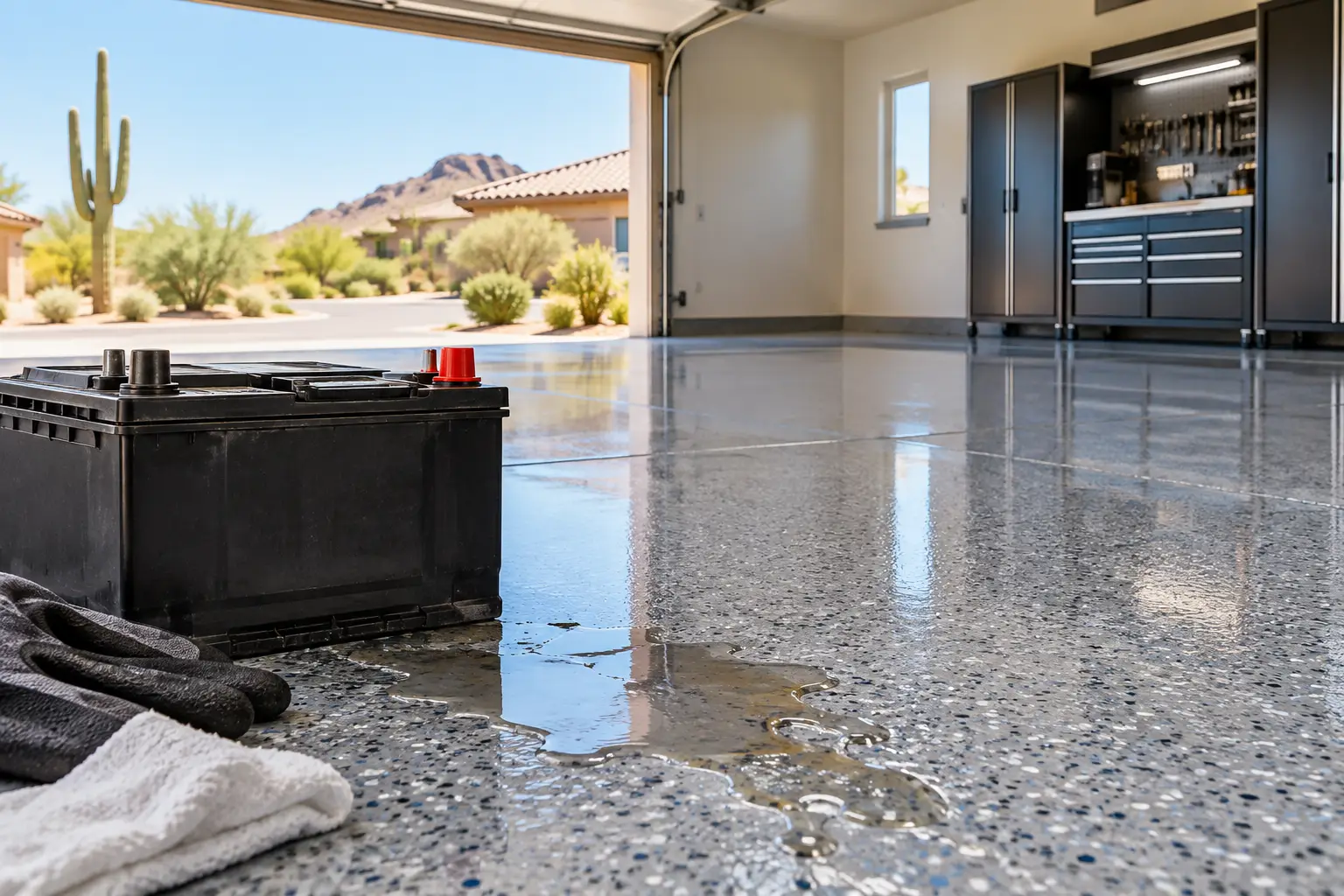
- Oil and chemical contamination. Contaminants can interfere with coating adhesion if they are not properly addressed.
- Old coatings and sealers. Existing material may need to be completely removed before a new system can bond properly.
- Weak or deteriorated surface material. Grinding can reveal concrete that is not strong enough to support a new coating.
- Previous repairs. Old patches may look solid until the surrounding surface is mechanically prepared.
The point is simple:
A garage floor coating should be installed over properly evaluated and properly prepared concrete.
Questions to Ask Before Hiring a Garage Floor Contractor
If you are comparing garage floor coating companies in Sun Lakes, Queen Creek, Gilbert, Chandler, Mesa, or anywhere in the East Valley, ask what happens to the joints before you choose a contractor.
Good questions include:
- Will you inspect the expansion joints and cracks before coating?
- How will damaged joint edges be repaired?
- Will active joints remain flexible?
- Are you mechanically diamond-grinding the concrete?
- How do you handle existing coatings and sealers?
- What type of coating system are you installing?
- Is the system 100% polyaspartic from the base coat through the topcoat?
Those answers can tell you a lot more about the installation than a box full of color-chip samples.
Common Garage Floor Joint Mistakes
One common mistake is trying to make every joint disappear regardless of whether the concrete still needs to move. Another is placing repair material over dirt, oil, deteriorated filler, or weak concrete.There is also a major difference between repairing damaged concrete and simply hiding it underneath a coating. A finished garage floor is only as dependable as the surface underneath it. If cracks, joints, or damaged areas are ignored during preparation, the homeowner may be dealing with the consequences later.
Why TRM Inspects the Slab Before Giving You an Estimate
We would rather look at the actual concrete than guess from square footage alone. During a TRM Garage Floors estimate, we look for conditions that can affect the installation, including:
- Expansion and control joints
- Cracks and damaged concrete
- Oil or chemical contamination
- Existing coatings and sealers
- Weak or deteriorated concrete
- Previous repairs
- Areas that may require additional preparation
Then we can explain what your garage actually needs before you decide whether to move forward. That is also why we believe the estimate should come before the color selection.
The pretty part is easy.
The condition of the concrete is what matters first.
Preparing Expansion Joints Before a Polyaspartic Garage Floor
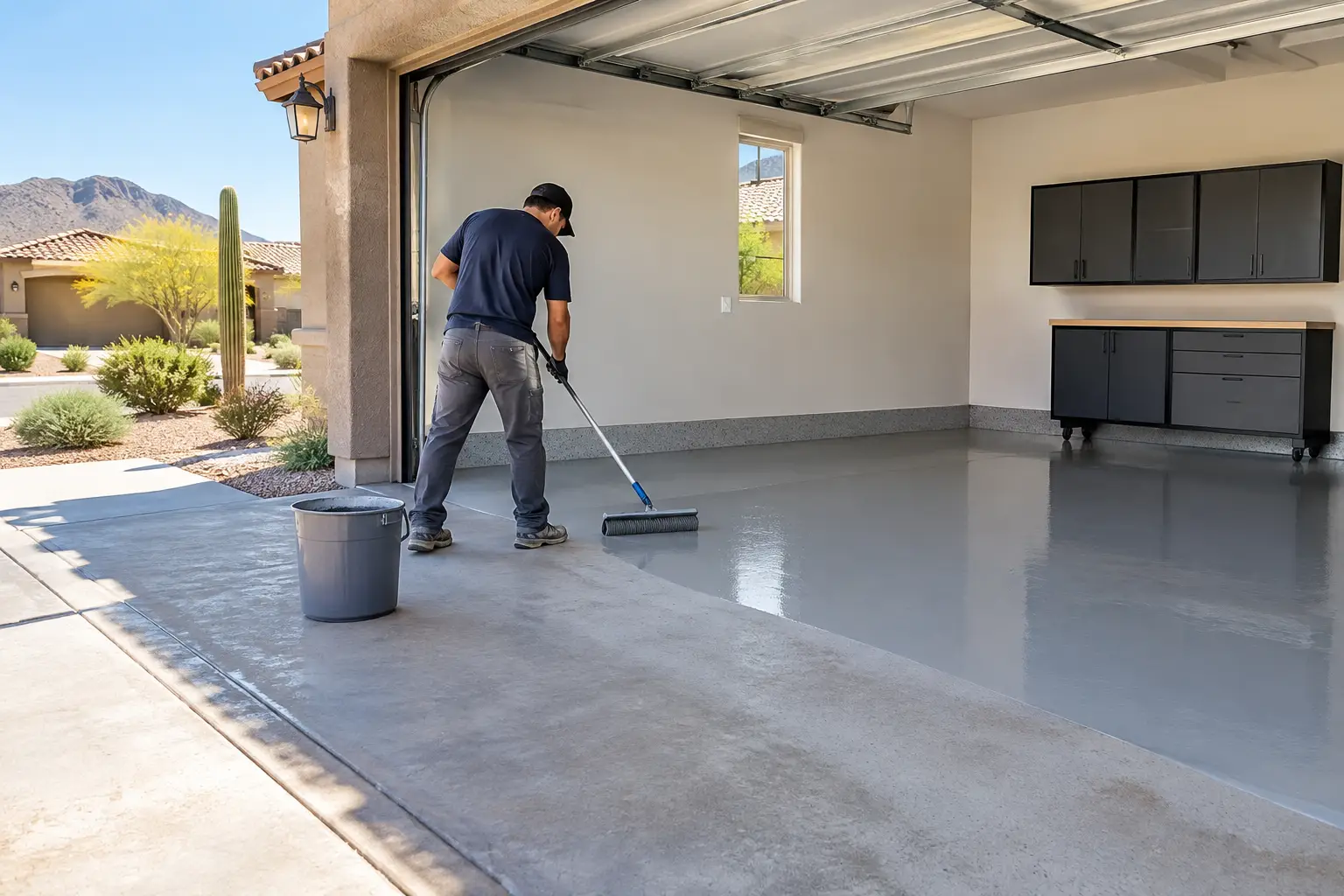
Joint repair and concrete coating are connected, but they are not the same task. The concrete still needs thorough mechanical preparation so the coating can bond to clean, properly profiled concrete. Expansion joints generally need to continue doing the job they were designed to do. Depending on the condition of the slab and the type of joint, a professional installer may repair damaged edges, maintain movement in the joint, and install the coating system around it accordingly. The exact approach depends on the specific garage.
This is why a garage floor should be evaluated as a complete system rather than treated like a quick weekend coating project. Concrete condition, repairs, joint movement, surface preparation, coating chemistry, and vehicle traffic all affect the final result.
Thinking About Coating Your Garage Floor?
If your garage has open joints, cracks, old repairs, or a failed coating, do not assume those problems will disappear underneath a new floor.
Have the concrete inspected first.
TRM Garage Floors installs professionally prepared, 100% polyaspartic garage floor systems throughout Sun Lakes, Encanterra, Queen Creek, Gilbert, Chandler, Mesa, San Tan Valley, Apache Junction, and surrounding East Valley communities.
TRM Garage Floors installs 100% polyaspartic coating systems for garages, patios, and commercial spaces across the East Valley. Free estimates, done in one day.