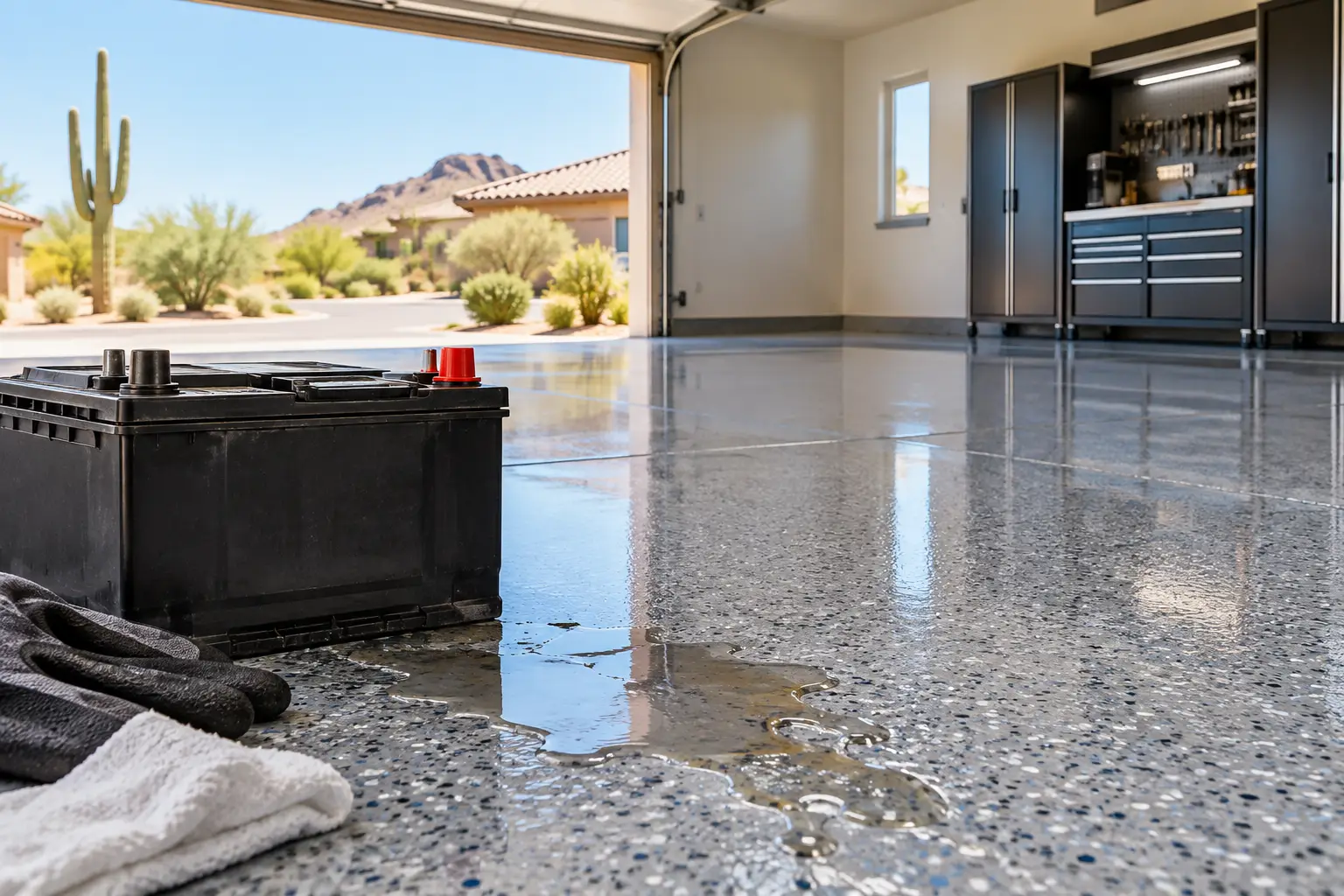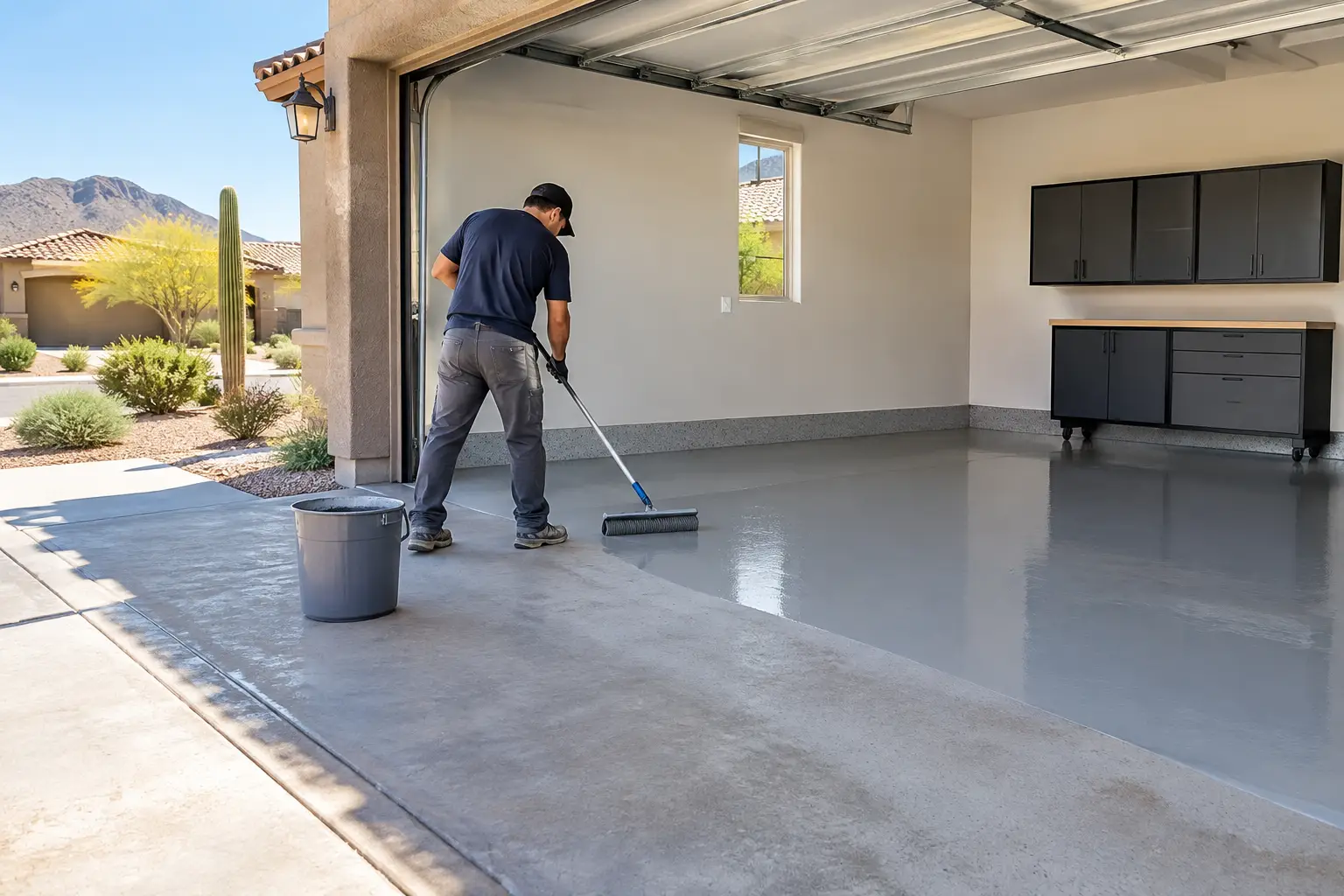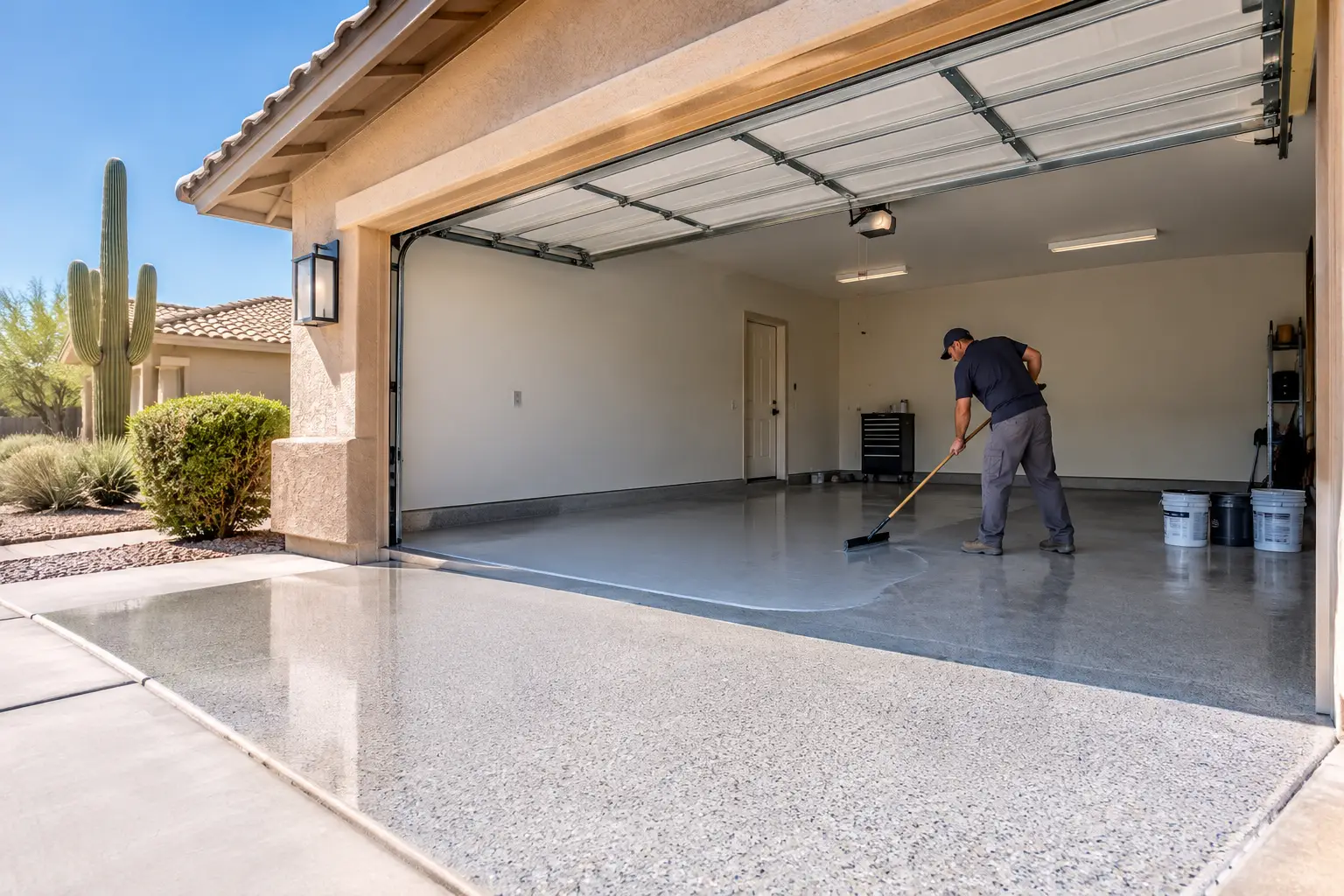
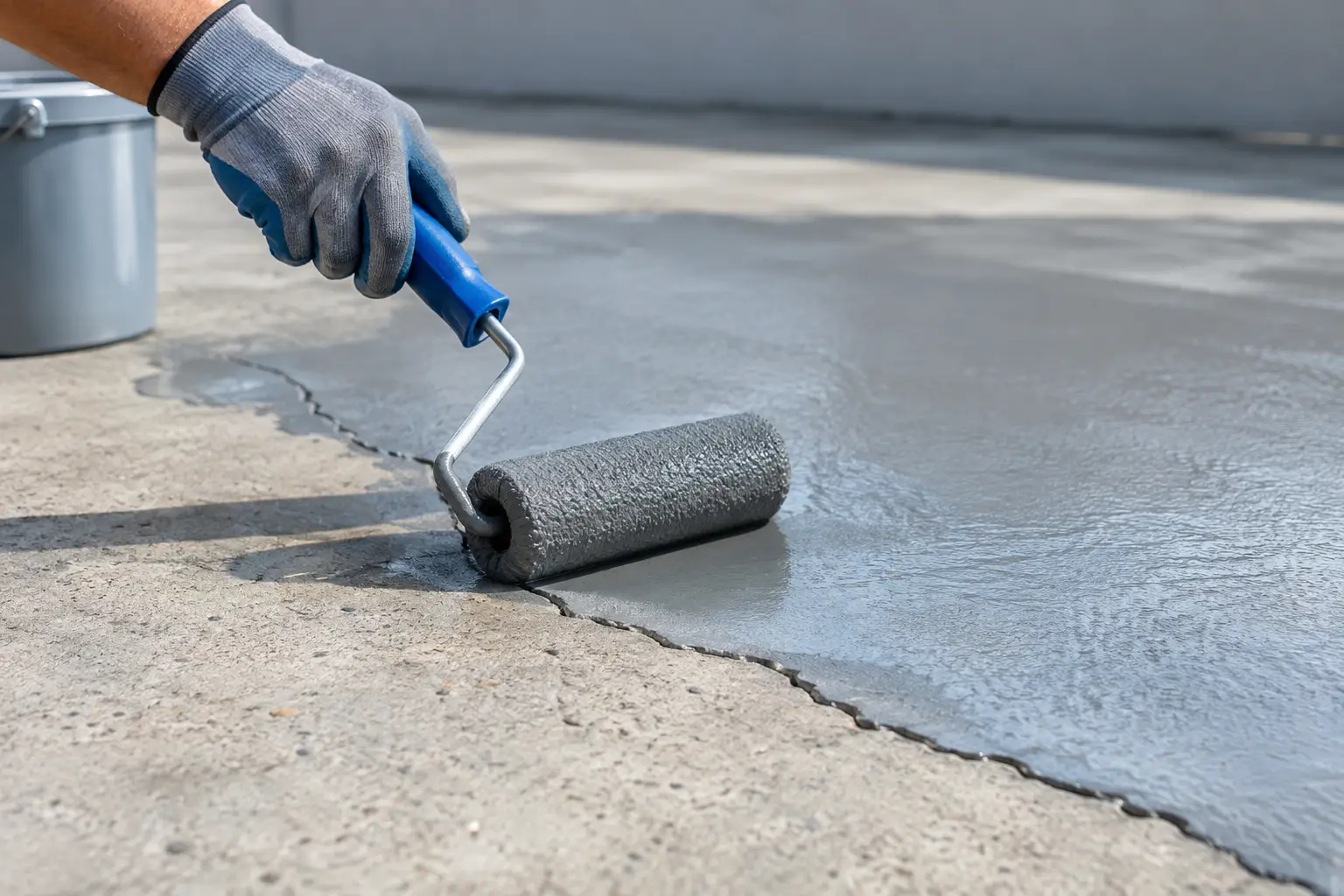
A garage floor can look fine from across the room, then reveal a web of cracks once you start clearing out boxes or washing away years of dust. So, can coatings cover concrete cracks? Yes, many cracks can be repaired and coated successfully. But a quality coating is not a magic blanket for every concrete problem. The condition, width, movement, and cause of the crack determine whether it can be filled, whether it needs a different repair, or whether the slab needs further evaluation first.
For East Valley homeowners, that distinction matters. Arizona heat, dry soil, settlement, heavy vehicles, and years of expansion and contraction all put stress on concrete. A professional coating system can make repaired cracks far less noticeable while protecting the surrounding surface. It cannot stop an actively moving slab from moving.
Can Coatings Cover Concrete Cracks Without Repairs?
Not well, and not for long. Applying a coating directly over an open crack may improve the appearance for a short time, but the crack can telegraph through the new surface as the concrete moves. Dust, loose material, and failed patching inside the crack can also prevent proper adhesion.
The right approach is to repair suitable cracks before coating begins. At TRM Garage Floors, preparation is treated as the foundation of the job, not a step to rush through. The concrete must be mechanically prepared, cleaned, and inspected before repairs and coatings are applied. No shortcuts and no skipped steps.
A properly repaired crack is typically opened or routed as needed, cleaned out, filled with a compatible crack-repair material, and ground smooth after curing. The coating system is then installed over a stable, prepared surface. With a decorative flake finish, most repaired hairline and minor non-moving cracks blend in very well. They may not disappear under close inspection, but they should no longer be the first thing you see when you pull into the garage.
Which Concrete Cracks Can Usually Be Coated?
Many common garage and patio cracks are repairable. Concrete naturally shrinks as it cures, and that often creates thin, stable cracks. These are especially common in older garage slabs and usually do not mean the floor is failing.
Hairline cracks, minor shrinkage cracks, and narrow surface cracks that have not changed over time are often good candidates for repair and coating. Small cracks along a wall or near a garage door can also be manageable when the surrounding concrete is solid and level.
The key word is stable. A coating contractor should look beyond the crack itself and consider whether the edges are still flush, whether there is loose concrete, and whether signs of moisture or movement are present. A crack that has been sitting quietly for years is very different from one that widens every summer or has one side sitting higher than the other.
A professional polyaspartic coating system provides a durable, easy-clean finish over properly repaired concrete. It is highly resistant to staining, hot-tire pickup, and the UV exposure that can punish lesser garage and patio finishes in Arizona. Still, even high-performance polyaspartic should be installed over concrete that has been repaired for its actual condition, not simply hidden for the day.
Cracks That Need More Than a Coating
Some cracks point to a deeper problem. Coating these areas without addressing the cause can lead to a visible crack line, a split repair, or other premature failure.
Watch for these conditions before planning a coating project:
- Cracks with one side higher than the other, often called vertical displacement or heaving
- Wide cracks that continue to open, especially if they have been patched more than once
- Cracks accompanied by sinking, soft soil, drainage problems, or separation from walls
- Concrete that is crumbling, spalling, or breaking apart around the crack
These conditions do not automatically mean the concrete must be replaced. In some cases, a more substantial repair or a separate evaluation is the right first step. But they do mean a responsible contractor should not promise that a surface coating alone will solve the issue.
The same is true for major moisture concerns. Concrete can transmit moisture vapor, and outdoor surfaces can face water intrusion from irrigation, rain, or poor drainage. The slab should be assessed so the coating system and preparation plan fit the environment. This is especially relevant around pool decks, patios, and covered outdoor spaces where traction and water management are part of the conversation.
Control Joints Are Not the Same as Cracks
Garage floors commonly have saw-cut lines or formed joints. These are control joints, placed in the concrete to encourage cracking along a planned line as the slab cures and moves. They are doing a job.
A control joint should not automatically be treated like a random crack. Depending on the slab and installation plan, it may need to remain flexible or be handled differently than a stable shrinkage crack. Filling every joint rigidly can create problems if the slab continues to expand and contract.
This is one reason an on-site assessment matters. A contractor should identify what is a crack, what is a control joint, and what is a sign of structural movement before recommending a repair approach. A floor can look cleaner and more finished without pretending that concrete no longer needs room to move.
What a Proper Crack Repair and Coating Process Looks Like
The lasting result comes from the sequence, not just the product name on the brochure. A one-day polyaspartic installation can be fast, but fast does not mean rushed.
First, the concrete is inspected for cracks, failed coatings, stains, surface damage, and moisture-related concerns. The crew then mechanically grinds the slab to remove weak material and create the proper profile for adhesion. Acid washing or simply rolling on a coating over a dusty garage floor is not the same level of preparation.
Next, repairable cracks are cleaned and filled with the appropriate material. Larger damaged areas may need patching and additional grinding to create a consistent surface. Once the repairs are ready, the base coat is applied, decorative flakes are broadcast when selected, and the floor is scraped and vacuumed before the clear polyaspartic topcoat goes down.
That system creates more than a cosmetic upgrade. It seals the prepared concrete surface against many of the stains, dust, and cleanup headaches that make garage floors frustrating to use. For most residential garage projects, vehicle traffic can generally return the following morning.
Will Repaired Cracks Be Invisible?
Usually, no. A trustworthy answer is better than a sales pitch here. Concrete repairs can be blended and greatly improved, but a repaired crack may remain faintly visible in certain light or at close range. Solid-color systems tend to show more surface variation than decorative flake systems. Flake coatings add visual depth and do a better job of blending repaired areas into the overall floor.
The goal is a clean, durable, cohesive surface, not an unrealistic promise that a decades-old slab will look like it was poured yesterday. Most homeowners find that once the floor is coated, organized, and easy to clean, the old crack repairs stop being the focus.
For commercial floors, appearance still matters, but repair decisions may also depend on traffic. A warehouse, shop, or showroom may need a repair plan that accounts for forklifts, rolling loads, vehicle traffic, and downtime. The coating should fit how the floor is actually used.
Arizona Heat Makes Preparation Even More Important
Concrete and coatings both respond to temperature. In Gilbert, Mesa, Chandler, Queen Creek, and throughout the East Valley, a garage floor can experience extreme heat, direct sunlight at the door, and hot tires rolling in after a long drive. These conditions are hard on basic coatings and poorly prepared surfaces.
Polyaspartic systems are a strong choice for Arizona because they cure quickly, resist UV damage, and hold up well against hot-tire pickup when installed correctly. But the material is only part of the answer. Surface preparation, crack repair, coating thickness, and proper application conditions determine whether the floor performs as expected.
If you have a cracked garage floor, start by looking at the pattern. A few thin, stable cracks may be a straightforward repair-and-coat project. A widening crack, uneven slab, or crumbling edge deserves a closer look before any coating goes down. A free on-site estimate gives you a practical answer for your specific concrete, so you can repair what needs repair and enjoy a floor built for how you live.
TRM Garage Floors installs 100% polyaspartic coating systems for garages, patios, and commercial spaces across the East Valley. Free estimates, done in one day.